ICONIC-LEAD adds a new piece to the story of Icotrokinra. Here is what the trial found, why its results are encouraging, and which questions the next stage of research can answer.
Study news: March 8, 2025 Reviewed: October 1, 2026
Evidence note: The source is a primary sponsor report; its statements are distinguished below from editorial interpretation. Trial results are specific to the studied treatment and population.
What Is the Compound?
Icotrokinra is an oral peptide that blocks the interleukin-23 receptor. IL-23 is part of immune signaling; blocking its receptor is intended to interrupt a particular inflammatory message. This is different from the appetite-related mechanisms of GLP-1 or amylin therapies. It is a helpful example of how wide the peptide field can be: the word peptide describes a molecular class, not one universal effect. The same compound is being investigated across related immune conditions, but each condition still requires its own trial evidence. Its U.S. psoriasis approval does not automatically approve use for inflammatory bowel disease.
How the Study Worked
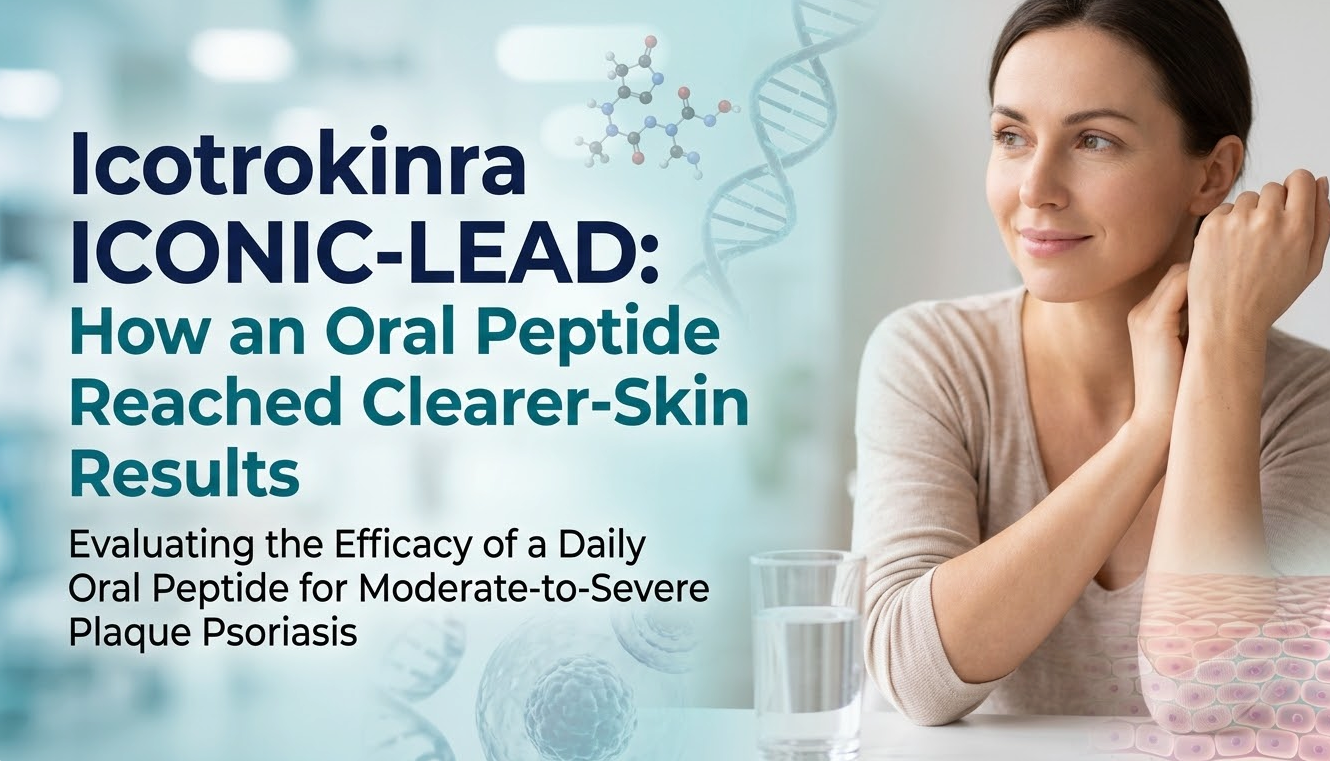
ICONIC-LEAD randomized 684 adults and adolescents aged at least 12 with moderate-to-severe plaque psoriasis. The phase 3 study compared the oral peptide icotrokinra with placebo. Its main early outcomes measured clear or almost clear skin and major improvement in psoriasis severity. See the primary study report.
Results and Key Findings
At week 16, approximately 65% achieved clear or almost clear skin, versus 8% with placebo. About 50% reached PASI 90, versus 4%. PASI 90 means a 90% improvement in a severity score; it is not another label for complete clearance. See the primary study report.
The Study in Plain English
Psoriasis trials use several response labels. Clear means no signs on the selected assessment, while almost clear allows a small amount of remaining disease. PASI combines the extent and severity of psoriasis; PASI 90 describes a 90% improvement in that score. It does not mean 90% of participants became completely clear. This is why the wording beside a percentage matters. From a patient’s perspective, future research can also ask about comfort, confidence and daily life, but those outcomes should only be claimed when measured. A skin-clearance result is a meaningful benefit on its own.
Key Insights: What Makes This Result Interesting?
The promising contribution is a targeted oral approach with meaningful skin responses in a late-stage trial. For someone living with psoriasis, the practical appeal of a tablet can coexist with the desire for substantial symptom improvement. The study tests whether those goals can come together. It also provides an accessible lesson about response labels: clear, almost clear and a large improvement describe different thresholds. Keeping those thresholds separate helps readers see what was achieved without making the result sound stronger than it was. The future of peptide therapy includes this kind of targeted immune research, extending well beyond appetite and weight management.
A Closer Look at the Evidence
The timing of a comparison matters. A randomized controlled period gives a stronger basis for attributing a difference to treatment than later follow-up without the same control. Long-term follow-up is still valuable because it asks whether a response persists, but its percentages should not be placed beside early placebo results as if both were measured under identical conditions. Read the endpoint, timepoint and group together. That habit turns a collection of impressive numbers into a clear account of what the study actually demonstrated and what later observation adds.
Including adolescents adds a valuable dimension to the evidence, but age groups should not be blended indiscriminately in later follow-up reports. The overall week-16 findings describe the randomized population; an adolescent-only later result answers a narrower question. Keeping those groups visible helps readers understand who was studied and prevents the strongest subgroup response from becoming a claim about everyone. The positive milestone is a targeted oral treatment supported by a late-stage program and now a U.S. approval for eligible patients.
Tolerability and the Complete Picture
The early sponsor report described similar overall adverse-event rates between groups. Similar rates do not mean that treatment has no risks. The current FDA prescribing information is the appropriate source for approved-product precautions. See the primary study report.
Synergistic Research Pairing and Related Compounds
A useful research pairing links a targeted mechanism with outcomes that matter: skin clearance, difficult-site response and persistence. Studies of different immune treatments can also help frame comparative questions. This is a pairing of evidence and endpoints, rather than an untested recommendation to combine peptides. Icotrokinra’s trials should not be turned into a claim that a general skin-research compound has the same clinical effect or that adding another product will improve its response.
What Patients Can Look Forward To
The FDA approved Icotyde on March 17, 2026 for eligible adults and adolescents with plaque psoriasis. That U.S. approval turns part of the earlier research promise into a current option, while approvals elsewhere must be checked separately.
Questions for the Next Stage
A useful next report would show how consistently the benefit appears, how long it lasts and how many participants can remain on treatment. Those questions help turn a promising result into a clearer picture of practical value.
Related Reading
For a separate perspective on metabolic and inflammatory research, read Joint Relief or Caloric Relief? GLP-1 in Arthritis & Psoriasis. Its mechanism discussion is background reading; the trial-specific conclusions here come from the primary report.
Explore Our Research Tools
Explore the Peptide Calculator, Protocol Builder and Protocol Tracker for measurement examples and organized research notes. These library tools do not recreate a clinical-trial formulation or select a medical regimen. For more explanations of compounds and research, visit the Standard Labs Blog Archive.
Sources
The promising direction: Icotrokinra ICONIC-LEAD adds evidence for informed treatment choices and further research.