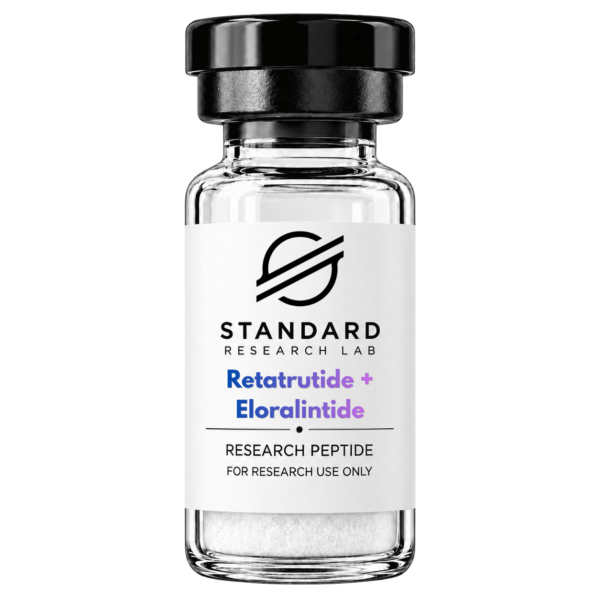

The 40-week Phase 3 TRANSCEND-T2D-1 clinical trial results establish a defining benchmark in the clinical development of Retatrutide (LY3437943). By deploying a single unimolecular triple agonist targeting the GIP, GLP-1, and glucagon receptors in adults with early type 2 diabetes managed solely with diet and exercise, this study provides definitive evidence of how synchronized multi-pathway co-agonism simultaneously drives deep glycemic normalization and double-digit weight reduction.
⚡ Quick Summary: Retatrutide TRANSCEND-T2D-1 Results
Quick Answer: In the 40-week Phase 3 TRANSCEND-T2D-1 trial evaluating 537 adults with early type 2 diabetes managed with diet and exercise alone, once-weekly retatrutide (LY3437943) met all primary and key secondary endpoints across dose tiers. The 9 mg dose cohort achieved the greatest HbA1c reduction of 2.0 percentage points (versus 0.8% with placebo), while the 12 mg dose cohort achieved the greatest mean body weight reduction of 16.8% under the on-treatment efficacy estimand (15.3% under the treatment-regimen estimand, versus 2.5% on placebo). By coordinating GIP-mediated insulin sensitization, GLP-1 satiety, and glucagon-driven energy expenditure in a single molecule, retatrutide sets a new standard for early metabolic disease intervention.
| Evaluation Arm (40 Weeks) | Mean HbA1c Reduction | Weight Loss (Efficacy Estimand) | Weight Loss (Regimen Estimand) |
|---|---|---|---|
| Retatrutide 12 mg (SubQ Weekly) | -1.9% points | -16.8% | -15.3% (p < 0.0001) |
| Retatrutide 9 mg (SubQ Weekly) | -2.0% points (Peak A1c) | -14.4% | -13.2% (p < 0.0001) |
| Retatrutide Lower Tiers (1.5–4 mg) | -1.2% to -1.6% points | -6.8% to -10.5% | Clear dose-proportional curve |
| Placebo Control Arm | -0.8% points | -2.5% | -2.3% (diet/exercise baseline) |
What Is the Compound? Mechanism of Unimolecular GIP, GLP-1, and Glucagon Agonism
Retatrutide (LY3437943) is an investigational, 39-amino-acid synthetic peptide engineered by Eli Lilly to act as a unimolecular triple receptor agonist co-targeting the GIP receptor (GIPR), the GLP-1 receptor (GLP-1R), and the glucagon receptor (GCGR). Engineered with a C20 di-acid fatty chain attached via a linker, retatrutide binds serum albumin reversibly to achieve a prolonged half-life of approximately six days, supporting once-weekly subcutaneous dosing.
The molecular engineering behind triple agonism establishes a multi-organ metabolic mechanism:
- GIP Receptor Agonism (Insulin Sensitization & Lipid Buffering): Direct activation of GIP receptors on subcutaneous adipocytes enhances postprandial lipid buffering, reduces systemic free fatty acid overflow, and promotes endogenous insulin secretion in a glucose-dependent manner.
- GLP-1 Receptor Agonism (Appetite Suppression & Gastric Slowing): Engages hypothalamic arcuate nuclei and brainstem tracts, delaying gastric emptying, reducing hedonic food cravings, and stimulating glucose-dependent insulin release while curbing alpha-cell glucagon excess during hyperglycemia.
- Glucagon Receptor Agonism (Hepatic Thermogenesis & Energy Expenditure): Glucagon acts directly on hepatocytes to stimulate mitochondrial lipid beta-oxidation, downregulate de novo lipogenesis, and increase resting energy expenditure. While glucagon alone carries a theoretical risk of raising hepatic glucose output, concurrent high-potency GLP-1 and GIP signaling counterbalances this, preserving glycemic control while accelerating caloric burn.
This unimolecular balance provides a single-peptide architecture that attacks metabolic disease across adipose tissue, the gastrointestinal tract, the central nervous system, and the liver simultaneously.
How the Study Worked: TRANSCEND-T2D-1 Trial Architecture
The TRANSCEND-T2D-1 clinical trial was designed as a randomized, double-blind, placebo-controlled Phase 3 study to evaluate the efficacy, safety, and dose-response dynamics of retatrutide in an unmedicated diabetic population:
1. Clean Monotherapy Baseline
Enrolled 537 adult participants diagnosed with type 2 diabetes inadequately controlled (baseline HbA1c 7.0–10.5%) solely through diet and exercise, free of background antidiabetic medications.
2. Structured 40-Week Treatment Duration
Subjects underwent stepped dose titration followed by sustained maintenance over 40 weeks across multiple dose cohorts (1.5 mg, 4 mg, 9 mg, and 12 mg) compared against matching placebo.
3. Dual Primary & Secondary Hurdles
The primary efficacy assessment evaluated change in HbA1c from baseline to Week 40, while major secondary endpoints tracked total percentage body weight loss and categorical responder thresholds.
4. Dual Estimand Analytical Framework
Evaluated primary outcomes using both the treatment-regimen estimand (intention-to-treat including treatment dropouts) and the trial-product/efficacy estimand (on-treatment biological potency).
Complete clinical methodology and primary corporate releases are documented in the Eli Lilly Primary Study Announcement.
Results and Key Findings: Glycemic Normalization and Weight-Loss Dissociation
The 40-week data from TRANSCEND-T2D-1 demonstrate that triple agonism produces profound improvements across both primary metabolic axes in early diabetes:
- Dose-Dependent Glycemic Reductions: Retatrutide drove substantial, statistically significant drops in HbA1c across all evaluated dose levels. The 9 mg cohort achieved the highest numerical reduction of 2.0 percentage points from baseline, while the 12 mg cohort achieved a 1.9 percentage point drop, compared to a 0.8 percentage point reduction in the placebo group (p < 0.0001).
- High-Magnitude Weight Loss (-16.8%): In body weight reduction, the 12 mg cohort achieved a 16.8% mean body weight loss under the on-treatment efficacy estimand (and 15.3% under the treatment-regimen estimand), compared to a 2.5% reduction with placebo plus lifestyle counseling (p < 0.0001).
- The Glucose vs. Weight Dose Dissociation: A notable clinical finding is that the peak dose for glycemic control (9 mg) was not identical to the peak dose for weight loss (12 mg). This dissociation highlights the complex receptor dynamics of triple agonism, where increasing glucagon receptor stimulation at 12 mg accelerates energy expenditure and fat mass loss while reaching a plateau in glucose lowering.
- Early Monotherapy Context: These outcomes represent retatrutide utilized as a first-line monotherapy in diet-managed diabetes; they must be interpreted independently from forthcoming companion trials evaluating retatrutide on top of metformin, SGLT2 inhibitors, or basal insulin.
The Study in Plain English: Understanding Diabetes vs. Obesity Metrics
Interpreting clinical trials in diabetes pharmacotherapy requires distinguishing between percentage point reductions in laboratory markers and proportional body weight loss:
| Trial Terminology | Clinical / Statistical Definition | Real-World Patient Meaning |
|---|---|---|
| 2.0 Percentage Point HbA1c Drop | Absolute numerical reduction in 3-month blood-sugar glycation (e.g., an 8.2% baseline dropping to 6.2%) | Brings the majority of patients well below the 7.0% clinical target into safe, non-diabetic ranges |
| 16.8% Proportional Weight Loss | Percentage drop from starting baseline (e.g., losing ~37 lbs from a 220 lb starting weight) | Major fat mass reduction that relieves pressure on weight-bearing joints and clears liver steatosis |
| Dose-Response Dissociation | When the dose that optimizes blood sugar (9 mg) differs from the dose that maximizes fat loss (12 mg) | Enables future clinicians to tailor dose levels based on whether a patient prioritizes glucose or weight |
| Treatment-Regimen Estimand | Evaluates every randomized patient regardless of whether they stopped medication early | Reflects expected real-world clinic averages, factoring in dropouts, missed doses, and non-compliance |
Key Insights: What Makes the TRANSCEND-T2D-1 Readout Critical?
The clinical contribution of TRANSCEND-T2D-1 provides vital insights for endocrinologists and researchers navigating multi-hormone therapeutics:
- Setting a New Benchmark in Diabetic Weight Loss: In type 2 diabetes, metabolic resistance consistently reduces responsiveness to incretin therapies. In landmark registration trials, semaglutide 1.0 mg produced ~6.7% weight loss in SUSTAIN-2, and tirzepatide 15 mg achieved ~13.1% in SURPASS-2. Achieving a 15.3% to 16.8% weight reduction establishes retatrutide as the most potent weight-reducing agent evaluated in a Phase 3 diabetic cohort.
- First-Line Interception Strategy: Standard treatment guidelines typically initiate diabetes management with metformin monotherapy, delaying multi-receptor injectables until disease progression occurs. Demonstrating a 2.0% HbA1c drop alongside 16.8% weight loss in diet-managed diabetes proves that early deployment of triple agonism can reset metabolic homeostasis early in the disease continuum.
- Validation of Glucagon Thermogenesis in T2D: For decades, activating the glucagon receptor in diabetes was viewed with caution due to fears of inducing hepatic glucose dumping. TRANSCEND-T2D-1 proves that when properly balanced against GIP and GLP-1 agonism, glucagon-driven energy expenditure accelerates fat loss while maintaining robust glucose normalization.
Tolerability & The Complete Safety Profile
Throughout the 40-week evaluation period, retatrutide exhibited an adverse-event spectrum characteristic of multi-target incretin and glucagon receptor agonism:
- Gastrointestinal Event Profile: Consistent with other incretin therapies, mild-to-moderate nausea, diarrhea, and vomiting were the most frequently reported treatment-emergent adverse events (TEAEs), clustering primarily during stepped dose escalation.
- Manageable Discontinuation Rates: Treatment discontinuation due to adverse events in the highest-dose 12 mg cohort was 5.1%, compared to 0.0% in the placebo group, demonstrating that stepped titration protocols maintained treatment persistence in early disease.
- Sensory and Cutaneous Effects: Dysesthesia (altered skin sensitivity or cutaneous paresthesias) was noted in a small subset of participants, a phenomenon previously documented in Phase 2 retatrutide cohorts that warrants monitoring in long-term safety extensions.
- Cardiovascular Hemodynamics: Consistent with glucagon and GLP-1 receptor physiology, transient increases in resting heart rate were observed, aligning with class expectations without emergent arrhythmia signals.
For complete safety data disclosures and subgroup breakdowns, reference the Eli Lilly Primary Investor Release.
Comparative Research Themes & Next-Generation Metabolic Pipelines
To contextualize retatrutide within the broader landscape of diabetes and obesity therapeutics, researchers compare single-, dual-, and triple-agonist mechanisms:
| Investigational / Approved Approach | Molecular Class & Architecture | Target Receptor Pathways | Clinical Profile in Early T2D |
|---|---|---|---|
| Retatrutide (TRANSCEND-T2D-1) | Unimolecular Triple Agonist | Tri-Agonist: GIP + GLP-1 + Glucagon | -2.0% HbA1c drop & -16.8% weight loss in monotherapy T2D |
| Tirzepatide (SURPASS-1) | Dual Incretin Peptide | Dual Agonist: GIP + GLP-1 | -2.07% HbA1c drop & -9.5 kg weight loss as monotherapy in T2D |
| CagriSema (REIMAGINE 1) | Fixed-Dose Co-Formulation | Dual Agonist: Amylin (Cagrilintide) + GLP-1 (Semaglutide) | -1.8% HbA1c drop & -13.8% weight loss in diet-managed T2D |
| Semaglutide (SUSTAIN 1) | Single GLP-1 Receptor Agonist | Single GLP-1 Receptor Pathway | Established benchmark: -1.5% HbA1c & -4.5 kg as monotherapy |
For an in-depth review of triple-receptor incretin pharmacology, explore our guide: Retatrutide Guide: GIP/GLP-1/Glucagon Action, Dosing & Trial Evidence. To evaluate head-to-head comparisons against dual incretins, read: Best GLP-1 for Weight Loss: Retatrutide, Semaglutide & Tirzepatide. Laboratory scientists evaluating chemical analogues can reference the Retatrutide Research Catalogue Entry, noting that laboratory reagents do not replicate regulated drug products.
What Patients and Clinicians Can Look Forward To
Retatrutide remains an investigational compound undergoing late-stage global Phase 3 trials across obesity, type 2 diabetes, metabolic liver disease (MASH), and chronic kidney disease; it is not yet approved by the U.S. FDA or international health authorities. However, the successful completion of TRANSCEND-T2D-1 establishes that triple agonism translates into clinical efficacy in diabetes.
For clinicians and patients, these findings introduce the prospect of a single weekly injection capable of driving double-digit weight reduction while normalizing blood sugar early in the disease course. As companion trials in the TRANSCEND program report data across oral-agent and insulin-treated populations, retatrutide’s place in diabetes care will become clearer.
Questions for the Next Stage of Research
While the 40-week TRANSCEND-T2D-1 data establish strong proof-of-concept, several vital clinical questions guide ongoing Phase 3 development:
- Efficacy in Advanced Add-On Populations: How will retatrutide perform when evaluated in companion trials as an add-on therapy to metformin, SGLT2 inhibitors, or basal insulin in patients with long-standing diabetes?
- Long-Term Cardiovascular Safety: What will dedicated cardiovascular outcome trials (CVOTs) reveal regarding retatrutide’s impact on major adverse cardiovascular events (MACE) and resting heart rate trajectories over multi-year exposure?
- Reversal of MASH and Hepatic Fibrosis in T2D: Given glucagon’s direct hepatic fat-clearing action, to what degree will retatrutide reverse hepatic steatosis and liver fibrosis in diabetic patients with biopsy-confirmed steatohepatitis?
Explore Our Research Tools
To assist laboratory scientists and clinicians in tracking peptide calculations, experimental schedules, and analytical observations, explore our specialized software suite:
- Calculate volume measurements and concentration parameters with the interactive Peptide Calculator.
- Structure research intervals, timing windows, and observation phases inside the Protocol Builder.
- Log laboratory markers, baseline patient metrics, and analytical notes with the Protocol Tracker Tool.
Scientific References & Primary Trial Documents
- Eli Lilly and Company: Lilly's Triple Agonist Retatrutide Demonstrated Significant Reductions in Blood Sugar and Weight in Phase 3 Diabetes Trial (Primary Announcement)
- Retatrutide Guide: GIP/GLP-1/Glucagon Action, Dosing & Trial Evidence
- CagriSema REIMAGINE 1 Results: Phase 3 Monotherapy Trial Data
- Best GLP-1 for Weight Loss: Retatrutide, Semaglutide & Tirzepatide
Clinical Verdict: The 40-week Phase 3 TRANSCEND-T2D-1 clinical trial confirms that unimolecular triple GIP, GLP-1, and glucagon receptor agonism via retatrutide delivers potent metabolic control in early type 2 diabetes managed with diet and exercise. Achieving up to a 2.0 percentage point reduction in HbA1c alongside a 16.8% mean body weight reduction (15.3% on an intention-to-treat basis) establishes that combining insulin sensitization, central satiety, and hepatic energy expenditure represents a powerful, evidence-based mechanism for comprehensive metabolic disease intervention.
← View all clinical research, trials & peptide analyses in our Blog Archive