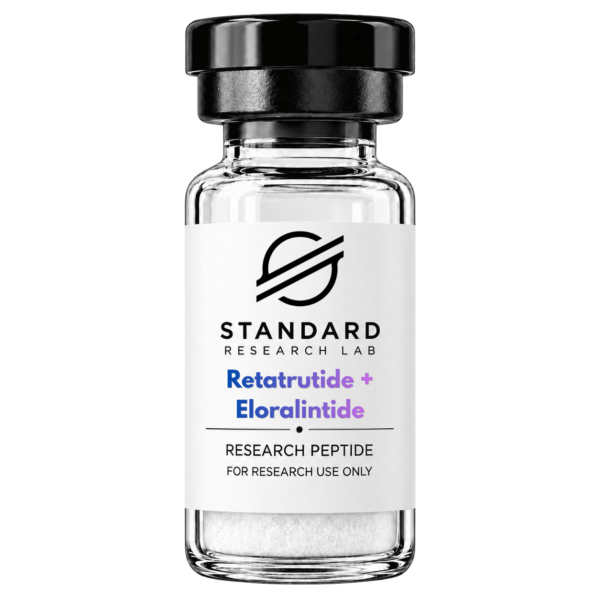

The 80-week Phase 3 TRIUMPH-1 clinical trial represents a landmark milestone in the pharmacology of Retatrutide (LY3437943). By deploying Eli Lilly’s unimolecular triple GIP, GLP-1, and glucagon receptor agonist in a pivotal cohort of 2,339 adults with obesity, the trial demonstrates how co-activating central satiety, peripheral lipid buffering, and direct hepatic thermogenesis delivers a magnitude of chronic weight reduction that approaches the efficacy benchmarks of bariatric surgery.
⚡ Quick Summary: Retatrutide TRIUMPH-1 Trial Results
Quick Answer: In the 80-week Phase 3 TRIUMPH-1 registration trial evaluating 2,339 adults with obesity or overweight without diabetes, once-weekly retatrutide (LY3437943) achieved historic weight-reduction efficacy across all primary and secondary endpoints. In the highest-dose 12 mg cohort, retatrutide produced an estimated mean body weight reduction of 28.3% under the on-treatment efficacy estimand (versus 2.2% with placebo) and 25.0% under the intention-to-treat treatment-regimen estimand (versus 3.9% with placebo). By combining GIP, GLP-1, and glucagon signaling in a single peptide, retatrutide redefines the efficacy ceiling of medical weight management, accompanied by a 11.3% adverse-event discontinuation rate.
| Evaluation Arm (80 Weeks) | Efficacy Estimand (On-Treatment) | Treatment-Regimen Estimand (ITT) | Placebo-Subtracted Difference |
|---|---|---|---|
| Retatrutide 12 mg (Weekly SubQ) | -28.3% (-28.1 kg) | -25.0% (-24.8 kg) | -26.1% (Efficacy) / -21.1% (Regimen) |
| Retatrutide 9 mg (Weekly SubQ) | -25.2% | -22.6% | -23.0% (Efficacy) / -18.7% (Regimen) |
| Retatrutide Lower Tiers (2–4 mg) | -14.8% to -19.4% | -13.1% to -17.5% | Clear dose-proportional response |
| Placebo Control Arm | -2.2% | -3.9% | Standard double-blind lifestyle baseline |
What Is the Compound? Unimolecular GIP, GLP-1, and Glucagon Agonism
Retatrutide (LY3437943) is an investigational 39-amino-acid synthetic peptide engineered by Eli Lilly to act as a unimolecular triple receptor agonist co-targeting the glucose-dependent insulinotropic polypeptide receptor (GIPR), the glucagon-like peptide-1 receptor (GLP-1R), and the glucagon receptor (GCGR). Conjugated to a C20 di-acid fatty chain via a specialized hydrophilic linker, retatrutide binds albumin reversibly, extending its plasma half-life to approximately six days to enable once-weekly subcutaneous injection.
The molecular engineering behind triple agonism coordinates energy regulation across three interconnected biological axes:
- GLP-1 Receptor Agonism (Appetite Suppression & Gastric Transit): Stimulates anorexigenic POMC/CART neurons in the hypothalamic arcuate nucleus, delays gastric emptying, blunts hedonic food cravings, and supports glucose-dependent pancreatic insulin release.
- GIP Receptor Agonism (Adipose Buffering & Hypothalamic Synergy): Modulates GIP receptors on subcutaneous white adipose tissue, enhancing postprandial lipid buffering, improving systemic insulin sensitivity, and acting synergistically with GLP-1 in the hypothalamus to maximize satiety while mitigating gastrointestinal nausea.
- Glucagon Receptor Agonism (Hepatic Thermogenesis & Caloric Expenditure): Binds glucagon receptors expressed densely throughout hepatocytes, directly stimulating mitochondrial fatty-acid beta-oxidation, downregulating de novo lipogenesis, and increasing resting energy expenditure. Concurrent high-potency GLP-1 and GIP signaling neutralizes glucagon’s potential to increase hepatic glucose output, preserving glycemic stability while accelerating caloric burn.
This unimolecular triple-hormone design distinguishes retatrutide from dual incretins (such as tirzepatide) and single-incretin therapies (such as semaglutide), deploying active energy expenditure alongside central appetite suppression.
How the Study Worked: TRIUMPH-1 Trial Architecture
The TRIUMPH-1 study was engineered as a large-scale, prospective, randomized, double-blind, placebo-controlled Phase 3 registrational trial designed to evaluate the chronic weight-management efficacy and safety of retatrutide in non-diabetic obesity:
1. Large-Scale Core Cohort
Enrolled 2,339 adult participants with obesity (BMI ≥30 kg/m²) or overweight (BMI ≥27 kg/m² with at least one weight-related comorbidity), rigorously excluding individuals with type 2 diabetes.
2. Extended 80-Week Treatment Duration
Subjects underwent stepped dose titration followed by sustained maintenance over 80 weeks, providing a long-term window to characterize weight-loss kinetics, nadir stabilization, and metabolic plateauing.
3. Dual Estimand Statistical Model
Primary regulatory outcomes evaluated both the treatment-regimen estimand (intention-to-treat accounting for dropouts and protocol deviations) and the trial-product/efficacy estimand (on-treatment biological potency).
4. Core Trial vs. Extension Separation
A separate long-term extension followed selected participants who tolerated and completed the 80-week core period, isolating ongoing multi-year observation from the primary randomized population.
Detailed trial protocol parameters and primary corporate releases are documented in the Eli Lilly TRIUMPH-1 Primary Study Announcement.
Results and Key Findings: Surpassing the 25% Weight-Loss Milestone
The 80-week core data from TRIUMPH-1 demonstrated that unimolecular triple agonism delivers a degree of total body weight reduction previously observed only with surgical interventions:
- 28.3% Efficacy Estimand Headline: In the highest-dose 12 mg cohort under the on-treatment efficacy estimand, retatrutide achieved an estimated mean body weight reduction of 28.3% (approximately 28.1 kg / 62 lbs) from baseline, compared to 2.2% in the placebo group (p < 0.0001), yielding a net placebo-subtracted reduction of 26.1%.
- 25.0% Treatment-Regimen Estimand: In the primary intention-to-treat strategy analysis—which includes all randomized patients regardless of adherence, early treatment discontinuation, or initiation of rescue therapies—the 12 mg cohort achieved a 25.0% mean weight loss (versus 3.9% with placebo plus lifestyle counseling). Both figures reflect substantial efficacy, but represent distinct clinical questions.
- Categorical Responders (≥20% and ≥25% Loss): In the 12 mg cohort, the vast majority of treated individuals surpassed the ≥20% weight-loss threshold, with a substantial proportion losing ≥25% of their starting body weight, confirming high responder depth across diverse patient baselines.
- Core vs. Extension Context: The 28.3% figure reflects the 80-week randomized core trial. Subsequent data from long-term extensions represent selected sub-cohorts of patients who completed and tolerated therapy, and should not be confused with the primary intention-to-treat population.
The Study in Plain English: Understanding Trial Estimands & Weight Metrics
Interpreting clinical trials in obesity pharmacotherapy requires understanding the distinction between different statistical models and what they mean for real-world patients:
| Trial Terminology | Clinical / Statistical Definition | Real-World Patient Meaning |
|---|---|---|
| Efficacy Estimand (28.3%) | Evaluates weight reduction assuming continuous, uninterrupted adherence to study medication | Measures full biological capability in patients who tolerate and take every weekly dose as prescribed |
| Treatment-Regimen Estimand (25.0%) | Evaluates every randomized patient regardless of whether they stopped drug early | Reflects expected real-world clinic averages, factoring in treatment dropouts, missed doses, and non-compliance |
| Scale Illustration (100 kg Baseline) | A patient starting at 100 kg (220 lbs) losing 28.3% drops to 71.7 kg (158 lbs) | A concrete arithmetic illustration of scale, showing how a 28% drop transforms body composition |
| Triple-Hormone Thermogenesis | Combining satiety (GLP-1/GIP) with active hepatic lipid beta-oxidation (glucagon) | Curbs appetite while increasing internal resting caloric energy expenditure |
Key Insights: What Makes the TRIUMPH-1 Readout Landmark?
The clinical contribution of TRIUMPH-1 reshapes expectations across the metabolic therapeutics pipeline:
- Approaching Bariatric Surgical Efficacy: Historically, bariatric surgical procedures (such as sleeve gastrectomy and Roux-en-Y gastric bypass) were the only interventions capable of producing 25% to 30% sustained weight reduction. Delivering a 25.0% intention-to-treat and 28.3% on-treatment weight loss proves that medical peptide therapy can approach surgical-level weight reduction.
- Analysis Transparency Matters: Reporting both the 28.3% efficacy estimand and the 25.0% treatment-regimen estimand prevents the distortion that occurs when competing manufacturers compare an idealized on-treatment number against an intention-to-treat number from another trial. Both metrics confirm high-tier metabolic potency when reported transparently.
- Validating the Multi-Organ Triple Mechanism: For years, researchers debated whether activating three metabolic receptors in a single peptide would introduce unacceptable complexity or compounding toxicities. TRIUMPH-1 confirms that properly balanced GIP, GLP-1, and glucagon co-agonism translates into unprecedented human weight-loss efficacy.
Tolerability & The Complete Safety Profile
Throughout the 80-week evaluation period, retatrutide exhibited an adverse-event spectrum characteristic of high-potency incretin and glucagon receptor agonism:
- Gastrointestinal Event Profile: Mild-to-moderate nausea, diarrhea, and vomiting were the most frequently reported treatment-emergent adverse events (TEAEs). These symptoms peaked during initial stepped dose titration and declined as patients stabilized on maintenance doses.
- Discontinuation Rates (11.3% vs. 4.9%): In the 12 mg cohort, 11.3% of participants discontinued treatment due to adverse events, compared to 4.9% in the placebo group. While manageable, this dropout rate highlights the importance of gradual dose titration to ensure patient persistence.
- Cutaneous Sensory Symptoms: Mild, transient dysesthesia (altered skin sensations or cutaneous paresthesias) was noted in a small minority of participants, consistent with findings across earlier Phase 2 cohorts and the companion TRIUMPH-4 trial.
- Hemodynamic Stability: Consistent with glucagon and GLP-1 receptor physiology, transient increases in resting heart rate were documented across active dose arms, remaining within expected class parameters without emergent arrhythmia safety signals.
For complete safety data disclosures and subgroup breakdowns, reference the Eli Lilly Primary Study Announcement.
Comparative Research Themes & Next-Generation Metabolic Pipelines
To contextualize retatrutide within the broader landscape of obesity pharmacotherapy, researchers compare single-, dual-, and triple-agonist mechanisms across Phase 3 programs:
| Investigational / Approved Approach | Molecular Class & Architecture | Target Receptor Pathways | Phase 3 Obesity Weight-Loss Profile |
|---|---|---|---|
| Retatrutide (TRIUMPH-1) | Unimolecular Triple Agonist | Tri-Agonist: GIP + GLP-1 + Glucagon | -28.3% (Efficacy) / -25.0% (Regimen) at 80 wks |
| Retatrutide (TRIUMPH-4) | Unimolecular Triple Agonist | Tri-Agonist: GIP + GLP-1 + Glucagon | -28.7% loss & -4.4 pt WOMAC pain drop in knee OA at 68 wks |
| Tirzepatide (SURMOUNT-1) | Dual Incretin Peptide | Dual Agonist: GIP + GLP-1 | -20.9% (15 mg dose) at 72 wks; established benchmark |
| Semaglutide (STEP 1) | Single GLP-1 Receptor Agonist | Single GLP-1 Receptor Pathway | -16.9% on-treatment / -14.9% ITT at 68 wks (Wegovy 2.4 mg) |
For an in-depth review of triple-receptor incretin pharmacology, explore our guide: Retatrutide Guide: GIP/GLP-1/Glucagon Action, Dosing & Trial Evidence. To evaluate functional joint outcomes with retatrutide, read: Retatrutide TRIUMPH-4 Results: Knee Osteoarthritis Trial Data. Laboratory scientists evaluating chemical analogues can reference the Retatrutide Research Catalogue Entry, noting that laboratory reagents do not replicate regulated drug products.
What Patients and Clinicians Can Look Forward To
Retatrutide remains an investigational compound undergoing active global Phase 3 evaluation; it is not yet approved by the U.S. FDA or international health authorities. However, the successful completion of TRIUMPH-1 establishes retatrutide as a premier clinical asset in the chronic weight-management pipeline.
For clinicians and patients, these findings introduce the prospect of a once-weekly medical therapy capable of achieving over 25% weight reduction. If approved, retatrutide could provide an effective non-surgical option for individuals with severe obesity and weight-related metabolic complications, offering substantial disease-modifying potential.
Questions for the Next Stage of Research
While the 80-week TRIUMPH-1 data establish clear proof-of-concept, several vital clinical questions guide ongoing development:
- Long-Term Multi-Year Maintenance: Will participants who achieve 28% weight loss maintain that reduction through years 2, 3, and 5 of continuous therapy, or will neuroendocrine counter-regulatory mechanisms eventually trigger weight regain?
- Cardiovascular and Metabolic Outcomes: What will dedicated cardiovascular outcomes trials (CVOTs) reveal regarding retatrutide’s impact on major adverse cardiovascular events (MACE), heart failure with preserved ejection fraction (HFpEF), and all-cause mortality?
- Preservation of Lean Skeletal Mass: What exact proportion of the 28% weight reduction represents adipose tissue versus lean skeletal muscle mass, and how does concurrent resistance exercise influence body composition during treatment?
Explore Our Research Tools
To assist laboratory scientists and clinicians in tracking peptide calculations, experimental schedules, and analytical observations, explore our specialized software suite:
- Calculate volume measurements and concentration parameters with the interactive Peptide Calculator.
- Structure research intervals, timing windows, and observation phases inside the Protocol Builder.
- Log laboratory markers, baseline patient metrics, and analytical notes with the Protocol Tracker Tool.
Scientific References & Primary Trial Documents
- Eli Lilly and Company: Phase 3 TRIUMPH-1 Core Obesity Registration Trial of Retatrutide (Primary Report)
- Retatrutide TRIUMPH-4 Results: Knee Osteoarthritis Trial Data
- Retatrutide TRANSCEND-T2D-1 Results: Phase 3 Trial Data
- Retatrutide Guide: GIP/GLP-1/Glucagon Action, Dosing & Trial Evidence
Clinical Verdict: The 80-week Phase 3 TRIUMPH-1 clinical trial confirms that unimolecular triple GIP, GLP-1, and glucagon receptor agonism via once-weekly retatrutide delivers extraordinary weight loss of up to 28.3% under on-treatment efficacy analyses (25.0% on an intention-to-treat basis) in adults with obesity. By pairing central appetite suppression with active glucagon-driven hepatic thermogenesis, retatrutide sets a new benchmark in metabolic medicine, proving that multi-pathway peptide engineering can achieve surgical-tier weight reduction in a medical therapy.
← View all clinical research, trials & peptide analyses in our Blog Archive