
The 80-week Phase 3 TRIUMPH-3 clinical trial results add an indispensable safety and efficacy dimension to the development of Retatrutide (LY3437943). By testing Eli Lilly’s unimolecular triple GIP, GLP-1, and glucagon receptor agonist in 1,949 adults with severe obesity (BMI ≥35 kg/m²) and established cardiovascular disease, this study examines whether high-magnitude metabolic weight reduction can be achieved safely in a high-risk cardiac population, while delivering critical early insights into major adverse cardiovascular event (MACE) trends.
⚡ Quick Summary: Retatrutide TRIUMPH-3 Results
Quick Answer: In the 80-week Phase 3 TRIUMPH-3 trial evaluating 1,949 adults with severe obesity (BMI ≥35 kg/m²) and established cardiovascular disease, once-weekly retatrutide (LY3437943) achieved substantial, dose-dependent weight loss of up to 22.6% from baseline. However, the secondary cardiovascular-event analysis was inconclusive: the hazard ratio for MACE-5 was 0.82 with a 95% confidence interval of 0.55 to 1.22. Because the confidence interval crosses 1.0, the study did not establish a statistically significant reduction in cardiovascular events, confirming that while weight-loss efficacy remains robust in complex cardiac populations, definitive proof of cardioprotection awaits dedicated, fully powered cardiovascular outcome trials (CVOTs).
| Evaluation Arm (80 Weeks) | Mean Body Weight Loss | MACE-5 Hazard Ratio (95% CI) | Adverse Event Discontinuation |
|---|---|---|---|
| Retatrutide High Dose (Weekly SubQ) | Up to -22.6% | 0.82 (0.55–1.22) pooled trend | 13.5% treatment dropout rate |
| Retatrutide Lower Dose Tier | Significant dose-ordered loss | 0.82 (0.55–1.22) pooled trend | 9.8% treatment dropout rate |
| Placebo Control Arm | Standard background control | Reference event rate (1.00) | 4.8% treatment dropout rate |
| Primary Regulatory Status | Weight endpoints successfully met | Inconclusive (includes unity) | Manageable profile in high-risk cardiac cohort |
What Is the Compound? Mechanism of Unimolecular Triple Agonism in Cardiovascular Disease
Retatrutide (LY3437943) is an investigational, 39-amino-acid synthetic peptide engineered by Eli Lilly to act as a unimolecular triple receptor agonist co-targeting the glucose-dependent insulinotropic polypeptide receptor (GIPR), the glucagon-like peptide-1 receptor (GLP-1R), and the glucagon receptor (GCGR). Engineered with a C20 di-acid fatty chain attached via a linker, retatrutide binds albumin reversibly, extending its plasma elimination half-life to approximately six days to support once-weekly subcutaneous dosing.
In patients with severe obesity and established cardiovascular disease (such as prior myocardial infarction, ischemic stroke, or peripheral artery disease), excess adiposity accelerates vascular failure through systemic arterial hypertension, atherogenic dyslipidemia, epicardial adipose inflammation, and endothelial dysfunction. Retatrutide coordinates metabolic and vascular signaling through three integrated biological pathways:
- GLP-1 Receptor Agonism (Atheroprotection & Satiety): Stimulates hypothalamic anorexigenic POMC neurons, delays gastric emptying to blunt postprandial glycemic excursions, and acts directly on vascular endothelial cells to reduce systemic vascular resistance and suppress vascular inflammation.
- GIP Receptor Agonism (Adipose Buffering & Insulin Sensitivity): Activates GIP receptors on subcutaneous white adipose tissue, improving lipid buffering, decreasing toxic circulating free fatty acids (FFAs), and working synergistically with GLP-1 in the hypothalamus to maximize satiety while mitigating gastrointestinal nausea.
- Glucagon Receptor Agonism (Hepatic Thermogenesis & Caloric Expenditure): Binds glucagon receptors in hepatocytes to accelerate mitochondrial lipid beta-oxidation, downregulate de novo lipogenesis, and increase resting energy expenditure. In cardiovascular disease, this pathway rapidly mobilizes visceral and ectopic pericardial fat, reducing physical cardiac compression and systemic metabolic strain.
Because glucagon and GLP-1 receptor stimulation exert chronotropic effects on sinoatrial nodal tissue, testing retatrutide in patients with established cardiovascular disease provides a crucial assessment of hemodynamic safety alongside weight loss.
How the Study Worked: TRIUMPH-3 High-Risk Trial Architecture
The TRIUMPH-3 study was engineered specifically to assess the safety, metabolic efficacy, and cardiovascular outcomes of retatrutide within a vulnerable, high-risk patient population:
1. Severe Obesity & Established CVD Cohort
Enrolled 1,949 adult participants with severe obesity (BMI ≥35 kg/m²) and documented, established cardiovascular disease (prior myocardial infarction, stroke, or symptomatic peripheral arterial disease), with or without type 2 diabetes.
2. Extended 80-Week Treatment Duration
Subjects underwent stepped dose titration followed by sustained maintenance over 80 weeks across two active retatrutide dose cohorts compared against matching placebo, evaluating multi-year exposure.
3. Primary Weight-Loss Efficacy Hurdle
The prespecified primary regulatory endpoints assessed percentage change in total body weight from baseline to Week 80, alongside categorical responder thresholds (≥5%, ≥10%, ≥15%, and ≥20% weight loss).
4. Exploratory MACE-5 Event Analysis
Pre-specified secondary outcomes tracked adjudicated 5-point Major Adverse Cardiovascular Events (MACE-5: cardiovascular death, non-fatal MI, non-fatal stroke, coronary revascularization, and hospitalization for unstable angina).
Detailed study methodology and primary sponsor disclosures are documented in the Eli Lilly Primary Study Announcement.
Results and Key Findings: Deep Weight Loss and Inconclusive Cardiac Event Data
The 80-week data from TRIUMPH-3 provide clear evidence of weight-loss potency in a complex population, while clarifying the statistical limits of its cardiovascular event readout:
- Substantial Weight Loss (Up to 22.6%): In this severely obese cohort with pre-existing heart disease, retatrutide achieved an average body weight reduction of up to 22.6% across active dose cohorts, demonstrating statistically significant superiority over placebo (p < 0.0001). While slightly lower than the 28.3% loss observed in non-cardiac obesity (TRIUMPH-1), a ~23% reduction represents a transformative metabolic change in patients with established vascular disease.
- The MACE-5 Hazard Ratio (0.82): In the secondary cardiovascular-event evaluation, retatrutide demonstrated an estimated hazard ratio (HR) of 0.82 for MACE-5 events compared to placebo. While a point estimate below 1.0 suggests a numerical trend toward event reduction, the 95% confidence interval ranged from 0.55 to 1.22.
- Interpreting Confidence Intervals Crossing Unity: Because the upper bound of the confidence interval (1.22) exceeds 1.0, the study did not establish a statistically significant reduction in cardiovascular events. The data are mathematically consistent with anything from a 45% risk reduction to a 22% risk increase, confirming that TRIUMPH-3 was not powered as a definitive cardiovascular outcomes trial.
- High-Risk Baseline Context: Achieving double-digit weight reduction in patients with pre-existing cardiovascular disease—who are often treated with beta-blockers and other medications that impede weight loss—proves that triple agonism remains effective despite complex metabolic backgrounds.
The Study in Plain English: Understanding Cardiovascular Endpoints vs. Risk Markers
Interpreting clinical trials in cardiometabolic medicine requires distinguishing between intermediate surrogate markers and hard clinical event counts:
| Trial Terminology | Clinical / Statistical Definition | Real-World Patient Meaning |
|---|---|---|
| Surrogate Biomarkers | Physical and laboratory indicators of disease risk, such as body weight, blood pressure, and cholesterol | Improving these numbers suggests better health, but does not guarantee that a heart attack will be prevented |
| MACE-5 Clinical Events | Counting hard clinical endpoints: CV death, heart attacks, strokes, revascularizations, and angina hospitalizations | The ultimate test of heart protection: proving that a therapy actually keeps patients alive and out of the hospital |
| Hazard Ratio of 0.82 | The relative rate of cardiovascular events occurring in the treated group compared to the control group | A point estimate suggesting an 18% numerical reduction in event risk; however, it remains an unproven trend |
| Confidence Interval Crossing 1.0 (0.55–1.22) | The statistical range of uncertainty; crossing 1.0 means no difference between drug and placebo is possible | Proves the trial was too small or had too few events to declare that the drug protects against heart attacks |
Key Insights: What Makes the TRIUMPH-3 Readout Critical?
The clinical contribution of TRIUMPH-3 provides vital guidance for cardiologists, endocrinologists, and clinical trialists:
- Separating Weight Success from Cardiovascular Proof: It is tempting to take a 22.6% weight-loss headline and assume that heart attacks and strokes were automatically prevented. TRIUMPH-3 demonstrates that while metabolic weight loss is indisputable, proving cardiovascular event reduction requires thousands of accumulated endpoints evaluated over multiple years.
- Establishing Hemodynamic Safety in High-Risk Patients: Because retatrutide stimulates glucagon and GLP-1 receptors—both of which increase resting heart rate by 2 to 6 beats per minute—clinicians feared that triple agonism might trigger ischemic events in patients with pre-existing coronary disease. The 0.82 hazard ratio point estimate provides reassuring early evidence that triple agonism does not provoke adverse ischemic signals in high-risk cardiac cohorts.
- The Bridge to Dedicated CVOT Programs: Dedicated cardiovascular outcome trials (such as SELECT for semaglutide) enroll tens of thousands of participants to accumulate sufficient events for statistical significance. TRIUMPH-3 serves as a successful proof-of-concept that establishes the exact event rates, effect sizes, and sample sizes required to design a registrational cardiovascular outcomes trial for retatrutide.
Tolerability & The Complete Safety Profile
Throughout the 80-week evaluation period, retatrutide exhibited an adverse-event spectrum characteristic of high-potency multi-receptor agonism within a medically complex cardiac population:
- Gastrointestinal Event Profile: Mild-to-moderate nausea, diarrhea, and vomiting were the most frequently reported treatment-emergent adverse events (TEAEs), clustering primarily during initial stepped dose escalation and stabilizing during maintenance.
- Discontinuation Rates (9.8% and 13.5% vs. 4.8%): Across the two active retatrutide cohorts, treatment discontinuations resulting from adverse events were 9.8% in the lower-dose arm and 13.5% in the higher-dose arm, compared to 4.8% in the placebo group. Given the advanced age and multi-morbidity of this cardiac population, these rates reflect acceptable clinical tolerability.
- Cardiac Rhythm and Vital Signs: Consistent with glucagon and GLP-1 receptor pharmacology, modest, transient elevations in resting heart rate were observed across active arms; no emergent ventricular arrhythmias or heart failure signals were detected.
For complete safety disclosures and detailed trial tables, reference the Eli Lilly Primary Study Announcement.
Comparative Research Themes & Next-Generation Metabolic Pipelines
To contextualize retatrutide within the broader landscape of cardiovascular and metabolic pharmacotherapy, researchers compare multi-receptor mechanisms across Phase 3 programs:
| Investigational / Approved Approach | Molecular Class & Architecture | Target Receptor Pathways | Cardiovascular & Metabolic Findings |
|---|---|---|---|
| Retatrutide (TRIUMPH-3) | Unimolecular Triple Agonist | Tri-Agonist: GIP + GLP-1 + Glucagon | Up to -22.6% weight loss in established CVD; MACE-5 HR 0.82 (0.55–1.22) |
| Retatrutide (TRIUMPH-1) | Unimolecular Triple Agonist | Tri-Agonist: GIP + GLP-1 + Glucagon | -28.3% efficacy / -25.0% ITT weight loss in core non-diabetic obesity |
| Semaglutide (SELECT Trial) | Single GLP-1 Receptor Agonist | Single GLP-1 Receptor Pathway | Proven 20% MACE reduction (HR 0.80, p < 0.001) in established CVD |
| Tirzepatide (SURMOUNT-MMO) | Dual Incretin Peptide | Dual Agonist: GIP + GLP-1 | Ongoing dedicated morbidity and mortality trial in obesity |
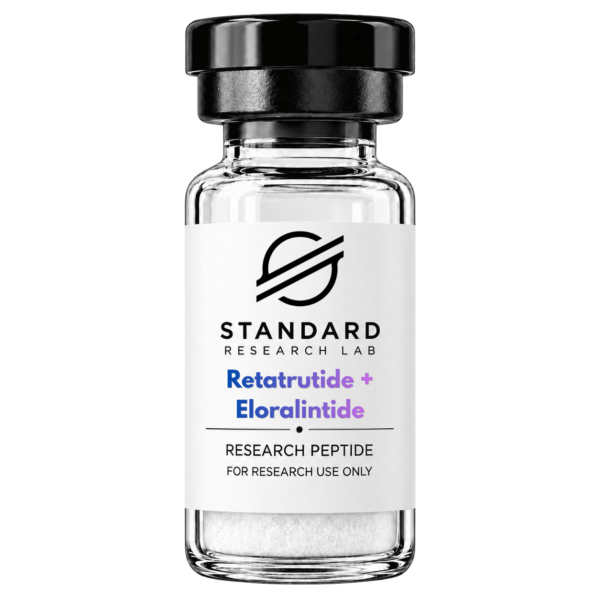
For an in-depth review of triple-receptor incretin pharmacology, explore our guide: Retatrutide Guide: GIP/GLP-1/Glucagon Action, Dosing & Trial Evidence. To evaluate weight-loss benchmarks in core obesity, read: Retatrutide TRIUMPH-1 Results: 80-Week Obesity Trial Data. To review joint mobility outcomes, explore: Retatrutide TRIUMPH-4 Results: Knee Osteoarthritis Trial Data. Laboratory scientists evaluating chemical analogues can reference the Retatrutide Research Catalogue Entry, noting that laboratory reagents do not replicate regulated drug products.
What Patients and Clinicians Can Look Forward To
Retatrutide remains an investigational compound undergoing active global Phase 3 evaluation; it is not yet approved by the U.S. FDA or international health authorities for obesity, diabetes, or cardiovascular disease. However, the successful completion of TRIUMPH-3 establishes that triple agonism produces substantial weight reduction in patients with established cardiovascular disease.
For clinicians and patients managing severe obesity alongside coronary disease, these findings provide reassurance regarding hemodynamic tolerability while confirming high-magnitude weight loss. As Eli Lilly advances dedicated cardiovascular outcome trials, the medical community will gain definitive clarity on whether retatrutide reduces hard cardiovascular events.
Questions for the Next Stage of Research
While the 80-week TRIUMPH-3 data establish clear metabolic efficacy, several vital clinical questions guide ongoing development:
- Fully Powered Cardiovascular Outcome Trials: What will a multi-year, dedicated CVOT enrolling over 15,000 patients reveal regarding retatrutide’s ability to achieve statistically significant reductions in 3-point and 5-point MACE?
- Impact on Heart Failure with Preserved Ejection Fraction (HFpEF): Given the profound reduction in visceral and epicardial adipose tissue, will retatrutide significantly improve functional status, exercise tolerance, and hospitalization rates in obesity-related HFpEF?
- Long-Term Hemodynamic Trajectories: How do chronic multi-year increases in resting heart rate interact with blood pressure reductions to influence long-term left ventricular remodeling and cardiac workload?
Explore Our Research Tools
To assist laboratory scientists and clinicians in tracking peptide calculations, experimental schedules, and analytical observations, explore our specialized software suite:
- Calculate volume measurements and concentration parameters with the interactive Peptide Calculator.
- Structure research intervals, timing windows, and observation phases inside the Protocol Builder.
- Log laboratory markers, baseline patient metrics, and analytical notes with the Protocol Tracker Tool.
Scientific References & Primary Trial Documents
- Eli Lilly and Company: Lilly's Triple Agonist Retatrutide Successful in Two Additional Phase 3 Trials (TRIUMPH-3 Primary Announcement)
- Retatrutide TRIUMPH-1 Results: 80-Week Obesity Trial Data
- Retatrutide TRIUMPH-4 Results: Knee Osteoarthritis Trial Data
- Retatrutide Guide: GIP/GLP-1/Glucagon Action, Dosing & Trial Evidence
Clinical Verdict: The 80-week Phase 3 TRIUMPH-3 clinical trial establishes that unimolecular triple GIP, GLP-1, and glucagon receptor agonism via once-weekly retatrutide delivers profound body weight reductions of up to 22.6% in adults with severe obesity and established cardiovascular disease. While the exploratory MACE-5 hazard ratio of 0.82 (95% CI: 0.55–1.22) is statistically inconclusive and requires confirmatory evaluation in dedicated outcome trials, TRIUMPH-3 confirms that triple agonism provides powerful, evidence-based metabolic weight loss with manageable tolerability in a high-risk cardiac population.
← View all clinical research, trials & peptide analyses in our Blog Archive