Back to Research & Articles
Laboratory Research & Educational Notice: This page explains the composition and reconstitution of BPC-157 and TB-500 blends for laboratory research reference. The compounds referenced are synthetic peptides sold strictly for research use and are not medicines. Nothing here is medical advice or a dosing instruction for human use.
The BPC-157 and TB-500 blend is the most commonly sold combination in the research peptide category, and the most commonly mislabelled. Two things cause nearly all the confusion: a "20 mg blend" is not 20 mg of each compound, and a 1:1 ratio is not the only ratio on the market. This page explains what is actually in the vial, how the two peptides differ, and how to run the reconstitution arithmetic when the label gives you a total rather than two separate numbers.
Quick Breakdown: The BPC-157 and TB-500 Blend at a Glance
Quick Answer: A BPC-157 and TB-500 blend combines two tissue-repair peptides in one vial. Most commonly it is supplied 1:1 — for example 5 mg + 5 mg in a 10 mg vial, or 10 mg + 10 mg in a 20 mg vial. The mass printed on the label is the combined total, so a 20 mg blend contains 10 mg of each, not 20 mg of each.
| Compound |
What It Is |
Primary Research Focus |
Practical Difference |
| BPC-157 |
Synthetic 15-amino-acid pentadecapeptide derived from a gastric protein fragment. |
Angiogenesis, fibroblast activity, gut-lining models, tendon and muscle repair models. |
Short-acting; usually studied in divided daily administration. |
| TB-500 |
Synthetic fragment of thymosin beta-4 (residues 17–23). |
Actin sequestration, cell migration, vascular remodelling, flexibility and recovery models. |
Longer residence; usually studied on a weekly or twice-weekly schedule. |
| Blend (1:1) |
Both peptides in a single lyophilized cake. |
Combined repair models where both mechanisms are of interest. |
Reconstituted once; the ratio is fixed and cannot be adjusted after mixing. |
What Each Peptide Actually Does
BPC-157
BPC-157 — Body Protection Compound — is a 15-amino-acid sequence derived from a protein found in gastric juice. It is unusually stable for a peptide, surviving acid and enzymatic breakdown, which is why the research literature is dominated by gastrointestinal and tissue-repair models. Its proposed mechanisms centre on VEGFR2 signalling and angiogenesis, fibroblast migration, and modulation of the nitric oxide system. The BPC-157 mechanism guide covers the pathway detail.
TB-500
TB-500 is the synthetic 17–23 fragment of thymosin beta-4, the actin-binding protein. Its research identity is cell migration: by sequestering actin monomers it influences cytoskeletal dynamics, which in turn affects how cells move into damaged tissue. That is a different mechanism from BPC-157's angiogenic focus, which is the entire rationale for combining them. See what TB-500 is and how the fragment works.
Reading the Label: Ratios and Total Mass
Blends are sold by total mass, and the ratio is stated separately — sometimes clearly, sometimes not at all. Three formats are common:
- 10 mg at 1:1 — 5 mg BPC-157 + 5 mg TB-500.
- 20 mg at 1:1 — 10 mg of each. This is the most common "Wolverine" configuration.
- Asymmetric ratios — for example 2:1 favouring BPC-157. The total stays the same; the split does not.
If a listing gives you a total and no ratio, it has told you nothing usable. Our breakdown of Wolverine blend ratios shows how to read the label and why the difference matters for concentration maths.
Reconstitution Arithmetic for a Blend
A blend is reconstituted exactly like a single peptide — one vial, one volume of diluent — but the concentration you calculate is a combined concentration. Individual concentrations are that number divided by the ratio.
| Vial (Total) |
Diluent Added |
Combined Concentration |
Per Compound (1:1) |
| 10 mg |
2.0 mL |
5.0 mg/mL |
2.5 mg/mL each (25 mcg/unit each) |
| 20 mg |
2.0 mL |
10.0 mg/mL |
5.0 mg/mL each (50 mcg/unit each) |
| 20 mg |
4.0 mL |
5.0 mg/mL |
2.5 mg/mL each (25 mcg/unit each) |
The third row is the one people get wrong: doubling the diluent halves the concentration, so a draw of the same volume delivers half the mass. For a full walkthrough of the mg/mL to syringe-unit conversion, use how much bacteriostatic water to add or the Peptide Calculator.
BPC-157 vs TB-500: Which One, and Why Blend Them
| Question |
BPC-157 |
TB-500 |
| Administration cadence in research |
Usually divided daily dosing. |
Usually weekly or twice weekly. |
| Mechanistic focus |
Angiogenesis, VEGFR2, fibroblasts, nitric oxide. |
Actin sequestration, cell migration, vascular remodelling. |
| Why blend instead of separate vials |
One reconstitution, one storage routine, and both mechanisms delivered together. The trade-off is that the ratio is fixed — separate vials let you change proportions, a blend does not. |
If you want the repair-focused comparison in more depth, the GLOW vs KLOW breakdown covers how the two-peptide blend sits alongside the four-peptide variants.
Handling and Storage
- Reconstitute gently. Add the diluent down the glass wall; do not spray onto the cake. Roll, never shake.
- Refrigerate after reconstitution at 2–8°C, protected from light, and use a vial case so the stopper stays clean.
- Record the reconstitution date. The 28-day window runs from first puncture; the reasoning is in how long BAC water is good for.
- Check the certificate of analysis for both peptides, not just the total mass. A blend's COA should report each component separately.
Frequently Asked Questions
Is a 20 mg BPC-157 and TB-500 blend 20 mg of each?
No. It is 20 mg total — 10 mg of each at a 1:1 ratio. Confusing total mass with per-compound mass is the most common error in blend arithmetic.
What ratio is standard?
1:1 is the most widely sold, usually as 5 mg + 5 mg or 10 mg + 10 mg. Some suppliers offer ratios weighted toward BPC-157. Check the label; the total alone tells you nothing about the split.
Can I mix BPC-157 and TB-500 myself instead of buying a blend?
Yes, from separate vials, and it gives you independent control of the ratio. What you lose is convenience: two reconstitutions, two storage records, and two batch numbers to check.
How much diluent should I add to a blend?
Enough to land your target draw on a readable part of the syringe. Two millilitres in a 20 mg blend gives 10 mg/mL combined, which is a common reference point. The calculator converts any volume to units.
See Current Blend Strengths and Ratios
Our blend listings state the total mass and the per-compound split explicitly, with a published certificate of analysis that reports each peptide separately rather than a single combined figure.
Wolverine Blend at 10 mg $50 and 20 mg $90 — $5.00 and $4.50 per milligram, with the per-compound split stated on the listing.
View the Wolverine Blend →
A BPC-157 and TB-500 blend is two peptides in one vial — commonly 1:1, commonly sold as a 10 mg or 20 mg total. The number on the label is the combined mass, so a 20 mg blend is 10 mg of each. Reconstitute it like any peptide, but do the concentration maths on the total and split by ratio, or your syringe units will be wrong by a factor of two.
→ Read the Full BPC-157 Research Profile

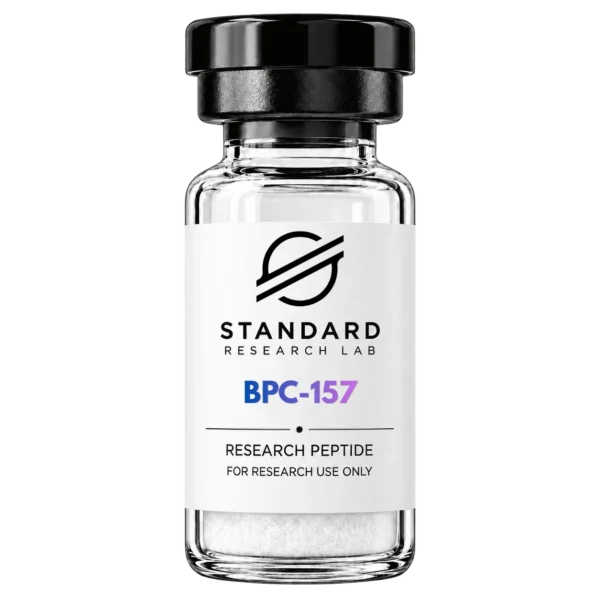 ✓ COA
 ✓ COA
 ✓ COA

One comment