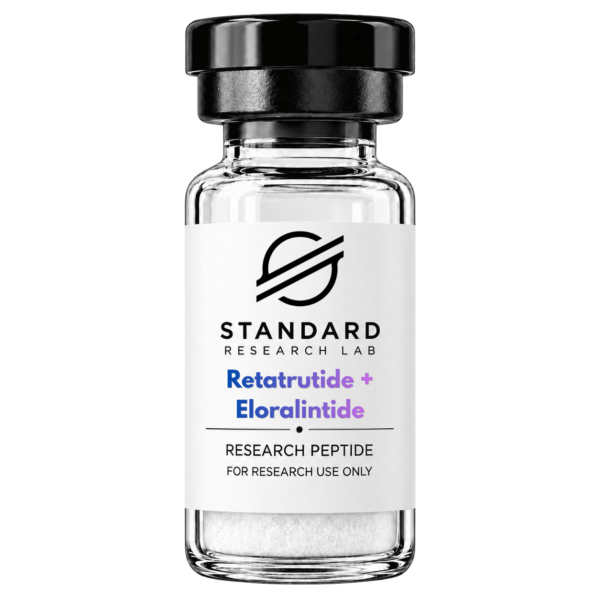
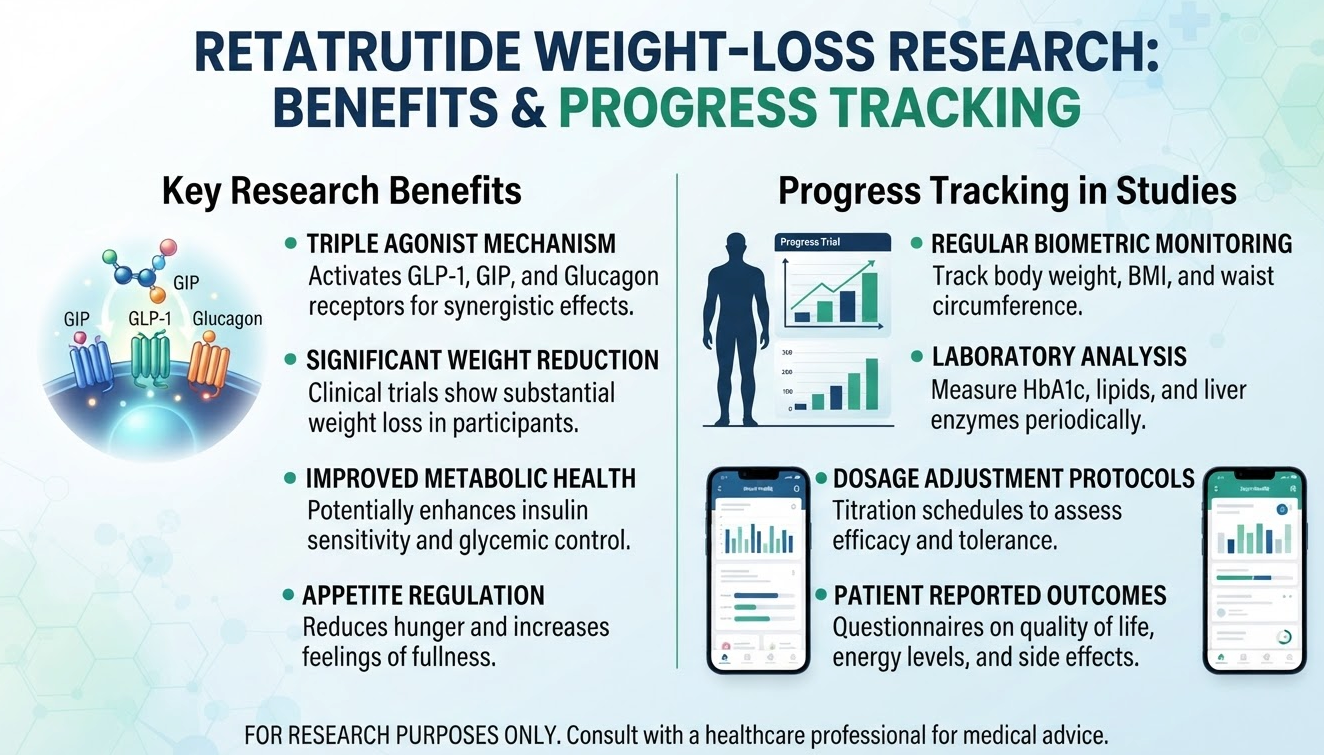
The evolution of metabolic pharmacotherapy accelerated from single-incretin GLP-1 mimetics (semaglutide) to dual GIP/GLP-1 agonists (tirzepatide). However, Eli Lilly’s retatrutide (LY3437943) altered the landscape by introducing a third critical hormonal pathway: glucagon receptor agonism. Evaluating published retatrutide trial weight loss results explains how this "triple G" tri-agonist drives unmatched body-weight reductions, clears hepatic steatosis, and accelerates basal energy expenditure without reaching a premature weight-loss plateau.
⚡ Quick Summary: Retatrutide Trial Weight Loss Results
Quick Answer: In the landmark 48-week Phase 2 trial published in the New England Journal of Medicine (NEJM), retatrutide achieved up to a 24.2% mean body weight reduction (approx. 58 lbs) at the 12 mg dose, with no plateau observed at the conclusion of the study. Unlike dual-incretins, retatrutide simultaneously activates GIP, GLP-1, and Glucagon receptors. The addition of glucagon increases hepatic lipid oxidation and resting energy expenditure, resulting in an extraordinary 86% relative reduction in liver fat and complete resolution of hepatic steatosis in over 85% of subjects with fatty liver disease.
| Treatment Cohort | Week 24 Mean Loss | Week 48 Mean Loss | Key Metabolic Endpoint |
|---|---|---|---|
| Retatrutide 12 mg (Escalation) | -17.5% | -24.2% (~58 lbs) | Trajectory still sloped downward; no weight plateau at 48 wks |
| Retatrutide 8 mg Cohort | -16.3% | -22.8% | Substantial visceral fat clearance & waist reduction |
| Retatrutide 4 mg Cohort | -12.9% | -17.3% | Outperformed standard single-agent GLP-1 maximum doses |
| Placebo Arm | -1.6% | -2.1% | Standard lifestyle control baseline |
The Tri-Agonist Mechanism: Why Glucagon Changes Everything
While GLP-1 and GIP agonists focus on insulinotropic glucose clearance and central appetite suppression, retatrutide incorporates glucagon signaling to turn the body's energy expenditure furnace back on:
1. GLP-1: Central Satiety & Motility
Activates receptors in the hypothalamus and hindbrain, slowing gastric emptying and dramatically reducing hunger cues and food cravings.
2. GIP: Adipocyte Buffering & Tolerability
Enhances insulin secretion under glucose loads, buffers nutrient deposition into adipose beds, and significantly mitigates GLP-1-mediated nausea.
3. Glucagon: Thermogenesis & Liver Fat Burning
Stimulates hepatic fatty acid beta-oxidation, increases systemic energy expenditure, and directly melts ectopic liver fat without inducing glycogen breakdown hyperglycemia.
Advance Multi-Receptor Metabolic Research
Track the leading edge of tri-incretin science. Review verified analytical testing, mass spectrometry reports, and certified purity for research-grade Retatrutide.
Shop Research Retatrutide →Diving into the NEJM Phase 2 Trial Evidence
The pivotal Phase 2 trial published by Jastreboff et al. (2023) evaluated 338 adult participants across 48 weeks of randomized, double-blind treatment:
- Unbroken Trajectory (No Plateau): Unlike semaglutide and tirzepatide—which typically show a leveling off (plateau) in weight reduction between weeks 36 and 48—retatrutide's weight curve was still steeply trending downward at week 48, suggesting that longer Phase 3 trials could yield weight loss exceeding 28–30%.
- 100% Response Rate: In the 8 mg and 12 mg cohorts, 100% of participants achieved ≥5% weight loss, while over 60% of participants on 12 mg achieved ≥20% weight reduction.
- The Liver Fat Cleansing Phenomenon: In a dedicated 1H-MRS imaging substudy of patients with non-alcoholic fatty liver disease (NAFLD), the 12 mg dose reduced intrahepatic fat by an astonishing 86%, with 85.7% of patients achieving complete resolution of hepatic steatosis (<5% liver fat content) by week 48.
- Cardiovascular Biomarkers: Systolic and diastolic blood pressure dropped significantly (average -7 to -10 mmHg), alongside major reductions in fasting triglycerides and LDL-C.
Retatrutide vs. Tirzepatide vs. Semaglutide: The Generational Shift
Understanding where retatrutide fits in the broader landscape helps contextualize clinical trial results against predecessor incretins:
| Metric / Target | Semaglutide (Ozempic/Wegovy) | Tirzepatide (Mounjaro/Zepbound) | Retatrutide (LY3437943) |
|---|---|---|---|
| Receptor Targets | Single (GLP-1) | Dual (GIP + GLP-1) | Triple (GIP + GLP-1 + Glucagon) |
| Mean Weight Loss (Trial Peak) | ~15% (at 68 weeks) | ~20.9% to 22.5% (at 72 weeks) | 24.2% (at 48 weeks, still dropping) |
| Primary Action on Energy | Suppresses caloric intake | Suppresses intake + metabolic buffering | Suppresses intake + actively raises caloric expenditure |
| NAFLD / Liver Fat Clearance | Moderate reduction | Significant reduction | Near-total resolution (86% fat clearance) |
For an exhaustive breakdown of how these mechanisms stack against one another, explore our head-to-head analysis: Best GLP-1 for Weight Loss: Retatrutide, Semaglutide, Tirzepatide & Amylin Agonists. To compare against dual-incretin biology, read What Is Tirzepatide? Dual-Incretin Mechanisms.
Tolerability & The Glucagon Heart Rate Profile
As with all powerful metabolic agents, evaluating retatrutide requires an objective look at safety and tolerability:
- Gastrointestinal Events: Mild-to-moderate nausea, vomiting, and diarrhea occurred predominantly during dose-escalation phases. Escalating gradually (starting at 2 mg or 4 mg) drastically reduced GI dropout rates.
- Transient Heart Rate Elevation: Glucagon receptor stimulation in the sinoatrial node produces a dose-dependent, transient increase in resting heart rate (peaking at ~5–8 beats per minute around week 24) which declined and stabilized toward week 48.
- Arrhythmia Monitoring: Serious cardiac events were statistically indistinguishable between retatrutide and placebo cohorts in Phase 2, though ongoing Phase 3 trials continue comprehensive telemetry tracking.
Synergistic Research Pairings: Mitochondrial & Tissue Protection
Because tri-agonist therapy drives such rapid, high-magnitude fat mobilization, researchers often pair retatrutide with complementary tissue-preserving and metabolic agents:
- Muscle & Mitochondrial Support (MOTS-c): Pair incretin-driven fat burning with MOTS-c to stimulate skeletal muscle GLUT4 translocation and support mitochondrial ATP production during intensive caloric deficits. Read our protocol analysis: What Is MOTS-c? Mitochondrial Signaling & Dosing Evidence.
- Targeted Visceral Adipose Mobilization (Tesamorelin): Compare systemic tri-agonist action with Tesamorelin, which selectively mobilizes ectopic abdominal fat while stimulating IGF-1 lean muscle preservation. Read: Tesamorelin: Visceral Fat vs Liver Fat & Ectopic Lipids.
- Comprehensive Trial Monograph: To review complete pharmacokinetic parameters and titration curves, explore our foundational monograph: Retatrutide Guide: Action, Dosing & Trial Evidence.
Standardized 2.0 mL Reconstitution Math for Research Vials
When working with lyophilized retatrutide research vials, maintaining exact liquid volume measurement is mandatory. Reconstituting with 2.0 mL of certified Pfizer Hospira Bacteriostatic Water yields the following standardized concentrations:
Concentration Formula: Mass (mg) ÷ Solvent Volume (mL) = Concentration (mg/mL). For example, adding 2.0 mL of BAC water to a 10 mg vial yields an active concentration of 5 mg/mL (500 mcg per 0.1 mL / 10 units on a U-100 syringe).
| Vial Material Amount | Diluent Added (BAC Water) | Final Concentration | Dose per 10 Units (0.1 mL) |
|---|---|---|---|
| 5 mg Vial | 2.0 mL | 2.5 mg/mL (2,500 mcg/mL) | 250 mcg (0.25 mg) |
| 10 mg Vial | 2.0 mL | 5.0 mg/mL (5,000 mcg/mL) | 500 mcg (0.50 mg) |
| 15 mg Vial | 2.0 mL | 7.5 mg/mL (7,500 mcg/mL) | 750 mcg (0.75 mg) |
| 20 mg Vial | 2.0 mL | 10.0 mg/mL (10,000 mcg/mL) | 1,000 mcg (1.00 mg) |
Confirm your custom volume ratios, unit hash marks, and target mcg concentrations with our free interactive Peptide Calculator.
Hardware Selection: Delivering Precision Metabolic Doses
Administering recurring weekly or micro-dosed incretin protocols requires laboratory delivery hardware that protects fragile molecular bonds and ensures absolute volumetric repeatability:
- Reusable Injection Pens: Avoid syringe graduation errors and stopper coring by loading your reconstituted retatrutide into 3mL Injection Pen Glass Cartridges and pairing with the V3 Reusable Injection Pen. The mechanical lead-screw delivers audibly calibrated, repeatable micro-volumes with zero needle-hub fluid loss.
- Precision Manual Syringes: If manual draws are preferred, draw with surgical-grade Easy Touch 31G U-100 Syringes with 0.5 mL barrels. The ultra-fine 31-gauge needle glides cleanly through septums without tearing or coring rubber stoppers.
- Secure Lab Storage: Protect your reconstituted incretins from heat and vibration inside the Compact 4-Slot Case or the high-capacity 10-Slot Peptide Vial Case. For mobile protocols, carry supplies inside the insulated Compact Peptide Travel Case.
Protocol Builder & Tracking Tools
Document every parameter of your tri-incretin research to ensure consistent reproducibility:
- Protocol Structuring: Plan your multi-week titration schedules, dosing steps, and reconstitution volumes inside the Protocol Builder.
- Daily Logging: Record daily weight metrics, resting heart rate trends, and beyond-use dates inside the Protocol Tracker Tool.
Frequently Asked Questions
Why did retatrutide produce no weight-loss plateau in its Phase 2 trial?
Most single and dual incretins experience a weight plateau as the body downregulates resting metabolic rate to conserve energy during caloric deficits. Retatrutide’s glucagon component continuously stimulates hepatic beta-oxidation and thermogenesis, preventing the adaptive metabolic slowdown that typically stalls fat loss.
Does retatrutide increase blood sugar because of its glucagon agonism?
No. While endogenous glucagon can stimulate hepatic glycogen breakdown into glucose, retatrutide’s concomitant GIP and GLP-1 receptor activation potently enhances glucose-dependent insulin secretion, preventing hyperglycemia while allowing the lipolytic and energy-expending benefits of glucagon to dominate.
When are retatrutide's Phase 3 trial results expected?
Eli Lilly's extensive Phase 3 "TRIUMPH" clinical program is currently underway across multiple international sites, evaluating long-term safety, body weight, type 2 diabetes management, and sleep apnea endpoints, with primary completion expected between late 2025 and 2026.
Related Reading & Scientific References
- Retatrutide Guide: GIP/GLP-1/Glucagon Action, Dosing & Trial Evidence
- Best GLP-1 for Weight Loss: Retatrutide, Semaglutide, Tirzepatide & Amylin Agonists
- What Is Tirzepatide? Dual-Incretin Mechanisms
- Jastreboff et al. (2023): Triple–Hormone-Receptor Agonist Retatrutide for Obesity — Phase 2 Trial (NEJM / PubMed)
The clinical data confirms that triple agonism represents a quantum leap in metabolic therapeutics. By pairing the appetite-suppressing power of GIP and GLP-1 with glucagon-driven thermogenesis and hepatic fat clearance, Retatrutide establishes an unprecedented benchmark for body composition research and non-alcoholic fatty liver disease resolution.
← View all peptide guides, research & protocols in our Blog Archive