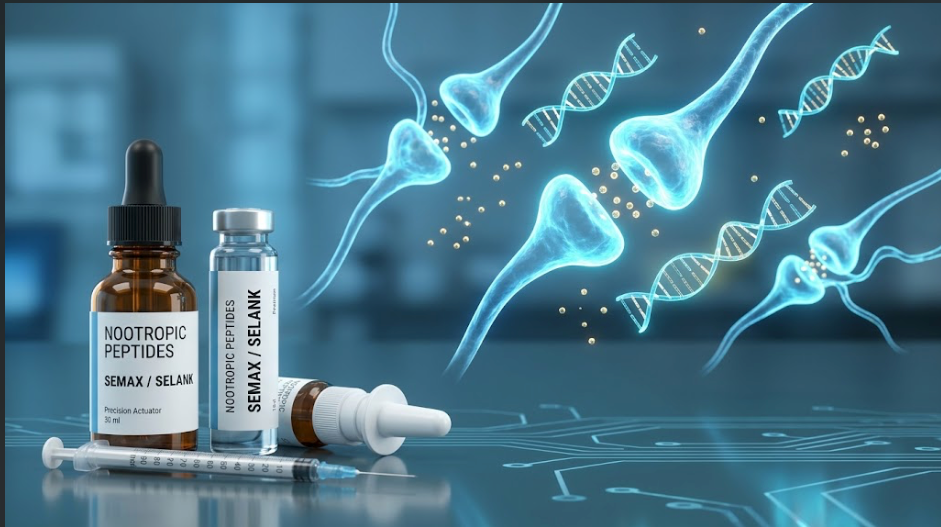
Nootropic Peptides for Cognitive Research: 2026 Guide
Investigating nootropic peptides for cognitive research represents one of the fastest-growing frontiers in modern molecular neuroscience. While historical cognitive pharmacology focused largely on non-selective central nervous system stimulants, contemporary laboratory models examine targeted peptide sequences designed to modulate specific neurotrophic pathways, neurotransmitter receptor dynamics, and cellular bioenergetics.
Preclinical investigations explore how synthetic and endogenous peptide sequences influence synaptic plasticity, mitochondrial resilience, and neuroprotective gene expression. Below is a scientific breakdown of the top six compounds evaluated in 2026 cognitive research models, their molecular mechanisms of action, synergistic assay designs, and essential laboratory handling standards.
Quick Summary: Nootropic Peptides for Cognitive Research at a Glance
Quick Answer: Nootropic research peptides such as Semax, Selank, NAD+, Pinealon, DSIP, and BPC-157 are investigated for their targeted influence on BDNF transcription, GABAergic modulation, mitochondrial bioenergetics, and glymphatic waste clearance. They provide preclinical models with advanced tools to study neuroplasticity without the high excitation of traditional central nervous system stimulants.
| Investigational Compound | Biological Pathway | Laboratory Focus |
|---|---|---|
| N-Acetyl Semax Amidate | TrkB receptor / Neurotrophin cascades | Quantifying BDNF, NGF, and hippocampal synaptic plasticity. |
| N-Acetyl Selank | GABA-A allosteric modulation | Evaluating anxiolytic pathways and monoamine neurotransmitter turnover. |
| NAD+ (Coenzyme) | SIRT1 deacetylation / PARP activity | Measuring mitochondrial ATP yield and oxidative DNA damage mitigation. |
| Pinealon | Nuclear chromatin binding | Analyzing circadian rhythm gene expression and antioxidant enzyme synthesis. |
| DSIP | Glymphatic fluid flow / EEG delta pacing | Assessing non-REM sleep architecture and central parenchymal waste clearance. |
| BPC-157 | VEGFR2 / Enteric-neural pathways | Exploring gut-brain axis stabilization and neuroinflammatory barrier integrity. |
Top 6 Compounds Evaluated in Preclinical Cognitive Models
1. N-Acetyl Semax Amidate
Semax is an engineered synthetic heptapeptide derived from a fragment of adrenocorticotropic hormone (ACTH 4-10). In laboratory animal studies, researchers examine N-Acetyl Semax Amidate (explore our deep-dive in the Semax Cognitive Research Guide) for its ability to stimulate the expression of Brain-Derived Neurotrophic Factor (BDNF) and Nerve Growth Factor (NGF) within hippocampal tissue.
- Structural Enhancements: Standard native peptides degrade rapidly when exposed to circulating endopeptidases. The synthetic addition of an N-terminal acetyl group paired with C-terminal amidation significantly reduces proteolytic cleavage.
- Pharmacokinetic Value: These terminal capping modifications improve trans-mucosal and blood-brain barrier permeability in animal models, extending the compound's functional experimental window.
2. N-Acetyl Selank
Derived from the endogenous immunomodulatory tetrapeptide tuftsin, N-Acetyl Selank (reviewed extensively in the Selank Cognitive & Anxiety Research Guide) is studied primarily for its regulatory effects on the inhibitory neurotransmitter system. In vitro binding assays and rodent behavioral models assess its interaction with GABAergic receptor complexes.
- Neuromodulatory Research: Preclinical literature indicates that Selank modulates allosteric GABA-A receptor affinity without the sedative or motor-depressive profiles seen with classical benzodiazepines.
- Monoamine Expression: Investigations demonstrate altered serotonin and dopamine metabolism in prefrontal cortex tissue, providing a framework for evaluating anxiolytic signaling pathways.
3. NAD+ (Nicotinamide Adenine Dinucleotide)
While structurally classified as a dinucleotide coenzyme rather than a classical amino acid chain, NAD+ functions as a core biochemical pillar in cognitive aging assays. It serves as an obligate cofactor for cellular energy production via the mitochondrial electron transport chain.
- Sirtuin Activation: In vitro models assess NAD+ as a critical substrate for Sirtuin (SIRT1–SIRT7) enzymes, which drive mitochondrial biogenesis, nuclear DNA repair, and protective epigenetic modifications.
- Metabolic Exhaustion Models: Preclinical assays evaluate replenishing depleted cellular NAD+ pools to counter oxidative stress and bioenergetic failure in aged neuronal tissue.
4. Pinealon (Glu-Asp-Arg)
Pinealon is a synthetic ultra-short regulatory tripeptide (L-glutamyl-L-aspartyl-L-arginine) evaluated for its epigenetic interactions within epiphyseal and neural cells. Developed within bioregulatory peptide models, it is small enough to penetrate nuclear membranes.
- Epigenetic Modulation: Laboratory studies analyze Pinealon's binding affinity to DNA strands, assessing how it upregulates antioxidant defense enzymes like superoxide dismutase (SOD).
- Circadian Biology: Research measures Pinealon’s impact on pineal gland tissue, specifically evaluating gene regulation involved in endogenous melatonin synthesis and circadian cycle alignment.
5. DSIP (Delta Sleep-Inducing Peptide)
Delta Sleep-Inducing Peptide (DSIP) is a naturally occurring nonapeptide originally isolated from dialyzed cerebral venous blood in sleep-induced animals. In modern neurobiological models, DSIP is evaluated for its influence on central delta-wave synchronization.
- Slow-Wave Sleep Architecture: Rodent electroencephalogram (EEG) assays measure the induction of restorative delta-wave sleep phases following administration.
- Glymphatic Waste Clearance: Because central waste elimination accelerates during slow-wave sleep, researchers evaluate DSIP models to study the glymphatic removal of neurotoxic metabolic byproducts from brain parenchyma.
6. BPC-157
Although predominantly known for peripheral angiogenic and connective tissue repair, BPC-157 (Body Protection Compound-157) is increasingly investigated in central nervous system protocols via the gut-brain axis.
- Dopaminergic & Serotonergic Modulation: Preclinical models demonstrate that BPC-157 attenuates neurotoxicity induced by dopaminergic and serotonergic disrupting agents in rodent striatal tissue.
- Endothelial Nitric Oxide Expression: By modulating VEGFR2 pathways and early growth response-1 (Egr-1) gene expression, studies examine its cytoprotective role in reducing neuroinflammatory permeability.
Synergistic Research Models: The 1:1 Semax & Selank Blend
Multi-compound assays frequently examine the interplay between stimulatory neurotrophic signals and inhibitory neurochemical pathways. A prominent example is the 1:1 Semax and Selank combination model.
While Semax drives central alertness, BDNF transcription, and dopaminergic focus, it can occasionally elevate markers of local excitation in preclinical models. Concurrently introducing Selank balances the protocol through GABAergic stabilization. This co-application allows researchers to investigate cognitive performance and prefrontal cortex processing without inducing hyper-excitatory stress cascades.
Laboratory Preparation and Reconstitution Standards
Maintaining the structural stability of neuro-active peptides requires rigorous bench handling standards (detailed in our Beginner's Guide to Peptides):
- Diluent Compatibility: Reconstitute dry lyophilized compounds using analytical-grade Bacteriostatic Water preserved with 0.9% benzyl alcohol to prevent bacterial contamination over repeated sampling intervals. For tonicity-sensitive cell cultures, utilize Sodium Chloride Bacteriostatic 0.9% Saline.
- Fluid Introduction Mechanics: Direct diluent slowly down the glass vial wall using a sterile EasyTouch 31G Syringe (calculate accurate volumetric draws with the Peptide Calculator). Avoid spraying diluent forcefully into the powder, which can cause foaming and interfacial shear stress. Swirl gently in circular orbits; never agitate or shake violently (review instructions in How to Reconstitute Peptides).
- Thermal Cold-Chain Storage: Store unopened lyophilized cakes at -20°C for long-term molecular preservation. Reconstituted liquid solutions must remain refrigerated at 2°C to 8°C (36°F to 46°F) inside a light-blocking Peptide Vial Case or insulated Compact Travel Case to eliminate photodegradation and thermal deamidation. Log active schedules inside the Protocol Tracker Tool.
Analytical Quality Controls: Verifying Research Stock
Reliable preclinical findings require verified raw materials. Researchers should enforce strict verification criteria prior to running assays:
- HPLC Purity Verification: Demand third-party High-Performance Liquid Chromatography (HPLC) showing purity levels equal to or greater than 99.0%.
- Mass Spectrometry (MS) Validation: Confirm molecular identity by checking that the observed molecular weight corresponds precisely to theoretical mass targets (learn How to Read a Peptide COA).
- Batch Matching: Cross-reference Certificate of Analysis (COA) batch and lot numbers directly against the physical containers received.
Investigating nootropic peptides allows neuroscientists to evaluate targeted molecular pathways—from BDNF upregulation and GABA modulation to mitochondrial bioenergetics and glymphatic clearance—without the drawbacks of central stimulants. By maintaining strict cold chains, precise reconstitution techniques, and robust analytical verification, laboratories ensure high-integrity preclinical data. Explore related monographs in our Blog Archive.
← View all peptide guides, research & protocols in our Blog Archive