

Tirzepatide Body-Composition Benefits: Fat Loss, Lean Mass and Function
Understand tirzepatide body-composition research, what DXA calls lean mass and why losing lean tissue is not an identical measure of muscle loss.
Read more →

Understand tirzepatide body-composition research, what DXA calls lean mass and why losing lean tissue is not an identical measure of muscle loss.
Read more →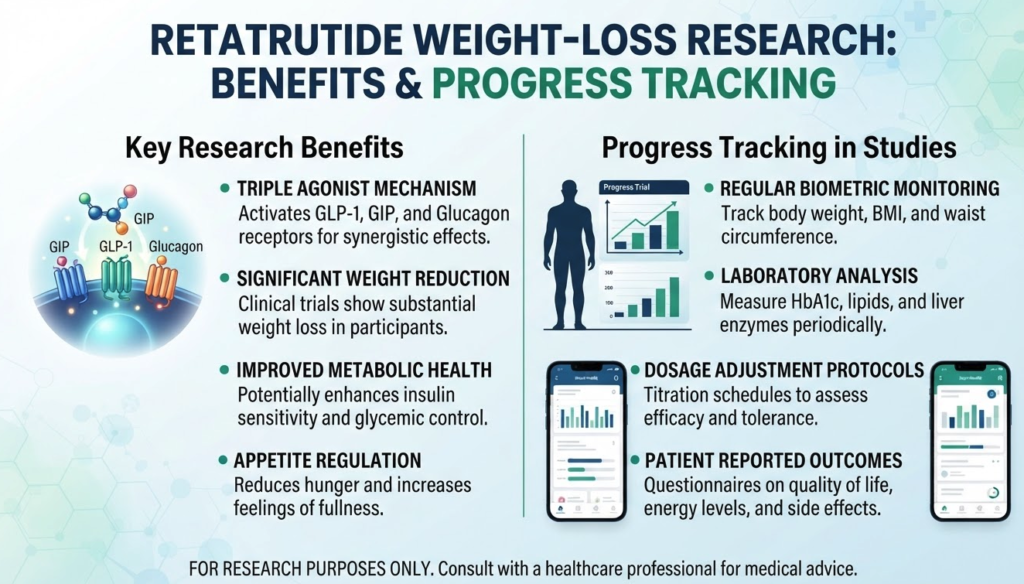
Learn how to read retatrutide’s phase 2 weight-loss results, including group averages, placebo comparisons, time points and tolerability.
Read more →
Explore kisspeptin research on sexual brain processing and learn why desire, arousal and fertility need different endpoints and evidence.
Read more →
Learn what Semax studies measured about BDNF, why brain regions and study models matter and what evidence would support a memory benefit.
Read more →
Understand Selank’s GABA-related research, why pathway effects differ from receptor binding and how to evaluate claims about calm focus.
Read more →
Explore SS-31 fatigue research and learn why primary walking endpoints and secondary fatigue scores tell different stories in clinical trials.
Read more →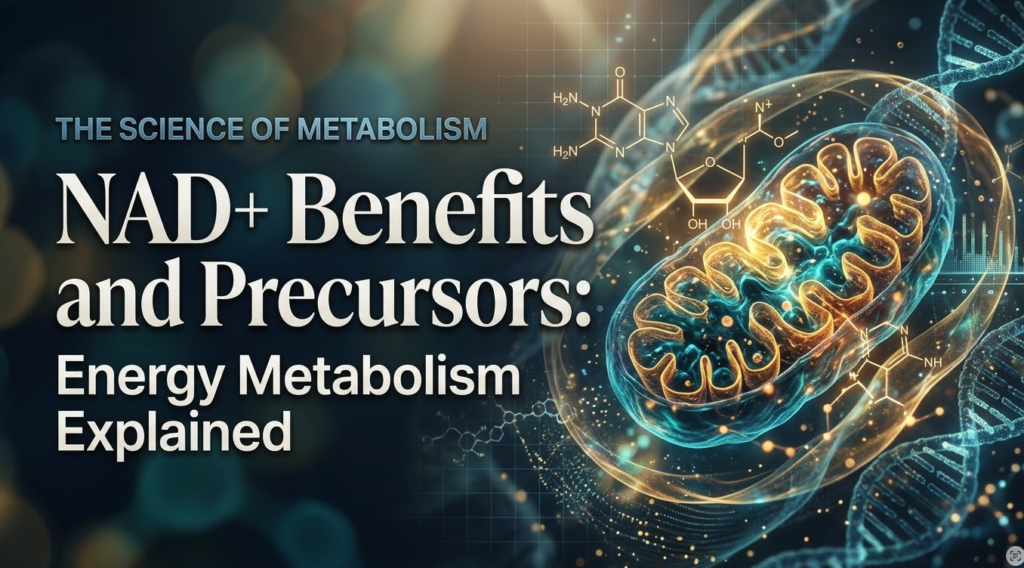
Compare NAD+ with NAD precursors, understand why delivery matters and see what an infusion metabolome study can tell us about energy claims.
Read more →
Explore Cartalax’s AED peptide identity, cartilage-marker research and the difference between a cellular finding and improved joint function.
Read more →
Learn how PT-141 relates to sexual desire, how bremelanotide differs from blood-flow drugs and which formulation the clinical evidence concerns.
Read more →
Understand Epithalon and Epitalon naming, telomerase research and why a change in cultured cells does not establish a human longevity benefit.
Read more →
Explore Pinealon’s neuroprotection research, the EDR peptide’s identity and the difference between protecting neurons and improving cognition.
Read more →
Read what DSIP insomnia studies measured, why sleep quality and sleep duration differ, and how to interpret claims about this sleep peptide.
Read more →
Learn the difference between GSH and GSSG, why glutathione is studied and how formulation and study duration change antioxidant claims.
Read more →
Understand why AHK-Cu attracts hair-growth interest, what human follicle experiments measured and how it differs from a proven hair treatment.
Read more →
Explore ARA 290 research for small fiber neuropathy, including human trials, symptom findings and what nerve-fiber measurements can tell us.
Read more →
Educational & Laboratory Research Notice: This article examines published research for scientific education and reference. Standard Labs research products are intended exclusively for laboratory and in-vitro use, not for human or veterinary administration. Descriptions of clinical studies are not instructions for use. Peptide nasal sprays attract attention because they combine an accessible delivery format with […]
Read more →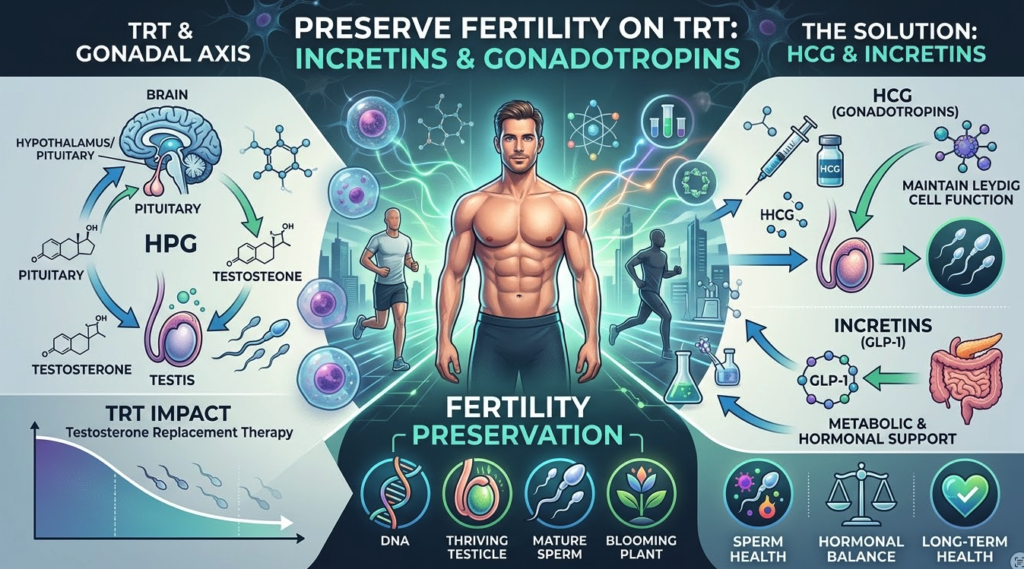
Educational & Laboratory Research Notice: This article reviews clinical andrology literature, gonadotropic signaling pathways, and reproductive endocrinology models strictly for educational evaluation. Therefore, references to hormone replacement protocols, incretin therapies, and fertility agents do not constitute medical advice or encourage unsupervised administration. Starting testosterone replacement therapy (TRT) offers substantial physical benefits, yet it presents a […]
Read more →
Back to Research & Articles 2026 GLP-1 Microdosing Protocol: Low-Dose Titration Guide Educational & Laboratory Research Notice: This article reviews clinical pharmacokinetics, receptor saturation kinetics, and volumetric compounding calculations strictly for educational and scientific reference. Therefore, discussions of incretin mimetics and dosing protocols do not constitute medical advice or promote unsupervised administration. Standard manufacturer titration […]
Read more →
Educational & Laboratory Research Notice: This article details pharmaceutical container dating protocols, preservative degradation kinetics, and multi-dose supply management for research reference. Validated lab procedures, USP standards, and individual protocol requirements govern actual inventory lifecycles. A persistent myth in peptide reconstitution is that a punctured vial of bacteriostatic water magically turns unusable on day 29. […]
Read more →
Back to Research & Articles Educational & Laboratory Research Notice: This article reviews mitochondrial pharmacology, bioenergetics literature, and preclinical longevity research strictly for educational and scientific reference. Therefore, discussions of investigational peptides do not constitute medical advice or encourage unsupervised human consumption. The mots c and ss-31 stack represents one of the most effective experimental […]
Read more →
A Canadian-owned, B.C. based supplier of certified research peptides. Building blocks for breakthroughs.

Standard Labs sells research peptides exclusively to qualified researchers and laboratories for in vitro and laboratory use. Please confirm before continuing.
By proceeding you affirm the statements above are true. Products are not for human or veterinary use, not for use in diagnostic procedures, and have not been evaluated by the U.S. Food and Drug Administration.