Orforglipron Explained: Oral Non-Peptide GLP-1 Receptor Agonist
Within incretin pharmacology and metabolic endocrinology, glucagon-like peptide-1 receptor agonists (GLP-1 RAs) have reshaped the management of obesity and type 2 diabetes. However, nearly all established therapies—including semaglutide, tirzepatide, and liraglutide—are peptide-based molecules. Even oral formulations of peptide agonists require high doses paired with absorption enhancers such as sodium N-(8-[2-hydroxybenzoyl]amino)caprylate (SNAC) and demand strict fasting windows to bypass gastric degradation.
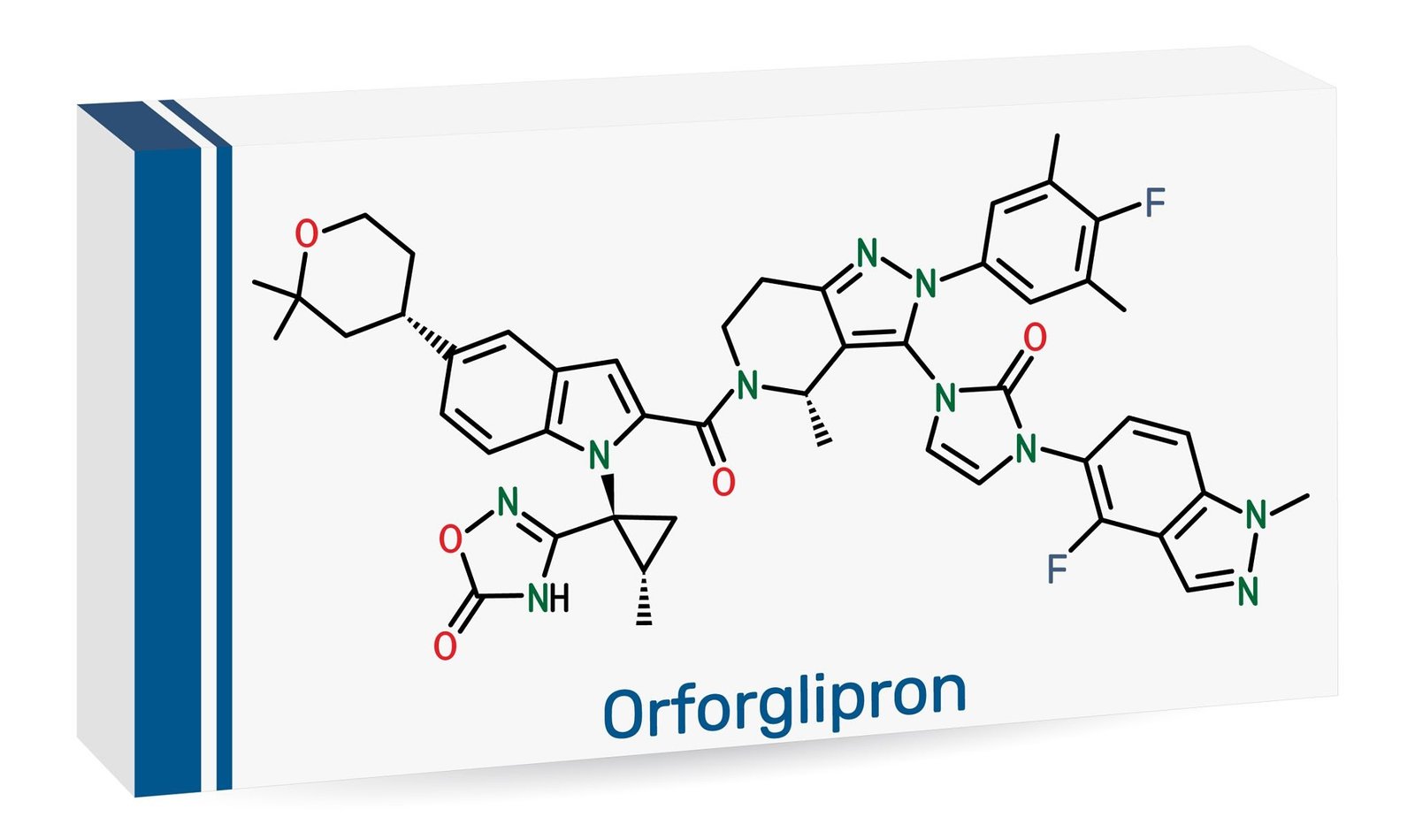
Orforglipron (investigational code LY3502970) represents a major structural breakthrough: a potent, highly selective, synthetic non-peptide small-molecule GLP-1 receptor full agonist. Engineered for high oral bioavailability without complex permeation enhancers, orforglipron provides sustained receptor activation independent of food or fluid intake restrictions. This comprehensive guide breaks down orforglipron’s chemical structure, molecular mechanism of action, pharmacokinetic profile, Phase 2 trial evidence, and complementary research intersections.
Quick Summary: What Is Orforglipron at a Glance?
Quick Answer: Orforglipron (LY3502970) is an investigational, orally bioavailable non-peptide small-molecule GLP-1 receptor full agonist developed by Eli Lilly. Unlike peptide incretins, it possesses no peptide bonds, rendering it completely resistant to DPP-4 and proteolytic stomach enzymes. It can be taken orally once daily with or without food, achieving up to 14.7% mean weight loss at 36 weeks in Phase 2 clinical trials.
| Pharmacokinetic Parameter | Oral Semaglutide (Peptide + SNAC) | Orforglipron (LY3502970, Small Molecule) |
|---|---|---|
| Molecular Structure | 31-amino-acid peptide + C18 diacid chain | Non-peptide heterocyclic small molecule |
| Oral Bioavailability | Very low (~0.4% to 1.0%) | High (predictable gastrointestinal absorption) |
| Absorption Enhancer Required | Yes (requires 300 mg SNAC per tablet) | None (inherent passive membrane permeability) |
| Dosing Restrictions | Strict: fasted with ≤120 mL water; wait 30 min before food | Flexible: taken with or without meals, water, or restrictions |
| Terminal Elimination Half-Life | Approximately 160 hours (~7 days) | Approximately 29 to 68 hours (enables steady once-daily dosing) |
| Metabolic Clearance | Proteolytic cleavage & beta-oxidation | Hepatic cytochrome P450 oxidation & glucuronidation |
What Is Orforglipron (LY3502970)?
Orforglipron is an orally active small-molecule agonist developed by Eli Lilly that targets the human GLP-1 receptor (GLP-1R). Unlike native GLP-1 (a 30-amino-acid peptide) or synthetic peptide analogues, orforglipron possesses a low molecular weight and an entirely non-peptidic heterocyclic scaffold.
Native peptide hormones face immediate proteolytic cleavage by dipeptidyl peptidase-4 (DPP-4) and neutral endopeptidase (NEP), alongside severe hydrolytic degradation by gastric pepsin and hydrochloric acid. Because orforglipron contains no peptide bonds, it is completely immune to DPP-4 and gastrointestinal proteases, enabling standard gastrointestinal absorption via passive transcellular diffusion.
Key molecular and structural attributes include:
- Chemical Class: Non-peptide small-molecule agonist.
- Oral Bioavailability: Readily absorbed throughout the upper gastrointestinal tract without requiring gastric absorption enhancers (e.g., SNAC).
- Nutrient Independence: Demonstrates consistent systemic exposure regardless of whether administration occurs in a fasted state or alongside meals.
- Receptor Full Agonism: Generates maximal intracellular cyclic adenosine monophosphate (cAMP) output comparable to endogenous native GLP-1(7-36)amide.
Mechanism of Action: Non-Peptide GLP-1R Allosteric Binding
Peptide agonists bind to the GLP-1 receptor via a classic "two-domain" model, where the large N-terminal extracellular domain (ECD) of the receptor captures the peptide body while the agonist's N-terminus inserts into the transmembrane core. Orforglipron engages the receptor through a distinct, non-canonical spatial mechanism:
- Transmembrane Pocket Insertion: Cryo-electron microscopy (cryo-EM) studies reveal that orforglipron bypasses dependency on the extracellular domain entirely. It penetrates directly into the upper transmembrane bundle, interacting with residues across transmembrane helices 1, 2, 3, and 7.
- Conformational Reorganization: Orforglipron’s core induces an outward movement of transmembrane helix 6 (TM6), mimicking the active structural state triggered by endogenous peptide ligands.
- G-Protein Alpha Subunit Coupling: The receptor shift drives intracellular coupling to stimulatory G-protein alpha subunits, stimulating membrane-associated adenylyl cyclase.
- cAMP & PKA Activation: Adenylyl cyclase rapidly converts cytosolic ATP into cyclic adenosine monophosphate (cAMP), activating Protein Kinase A (PKA) and exchange proteins directly activated by cAMP (EPAC2).
- Glucose-Dependent Insulin Secretion (GSIS): In pancreatic beta cells, elevated ATP/cAMP closes ATP-sensitive potassium channels, depolarizing the cell membrane and opening L-type voltage-gated calcium channels to trigger exocytosis of stored insulin granules.
- Central Satiety Signaling: Beyond peripheral islet actions, orforglipron crosses the blood-brain barrier to bind GLP-1 receptors in the arcuate nucleus (ARC) and area postrema, stimulating pro-opiomelanocortin (POMC)/CART neurons to induce satiety while suppressing neuropeptide Y (NPY)/agouti-related peptide (AgRP) hunger signaling.
Key Research Findings and Phase 2 Clinical Trial Data
Published Phase 2 data from multi-center clinical trials published in The New England Journal of Medicine and The Lancet document orforglipron’s efficacy across glycemic control and weight management models:
1. Significant Adiposity Reduction
In a 36-week Phase 2 randomized, double-blind trial evaluating adults with obesity or overweight without type 2 diabetes, orforglipron demonstrated dose-dependent body weight reductions:
- Mean Weight Loss: Participants receiving higher doses (36 mg and 45 mg once daily) achieved mean weight loss ranging between 12.6% and 14.7% at week 36, compared to 2.3% in the placebo cohort.
- Threshold Achievement: Up to 75% of subjects across highest-dose cohorts achieved at least 10% weight loss, and nearly 60% reached a 15% or greater reduction within 36 weeks.
- Trajectory: Weight curves had not plateaued at week 36, indicating continued lipolytic and caloric expenditure effects with extended exposure.
2. Glycemic Regulation in Type 2 Diabetes
In a parallel 26-week study evaluating type 2 diabetes cohorts, orforglipron demonstrated robust glycemic modulation:
- HbA1c Reductions: Mean reductions in glycosylated hemoglobin reached up to -2.1% from baseline at higher maintenance doses, outperforming standard comparator arms.
- Fasting Blood Glucose: Marked suppression of morning fasting glucose levels emerged within 1 to 2 weeks of initiation.
- Beta-Cell Rest: Reductions in circulating fasting insulin and C-peptide levels pointed to alleviated pancreatic insulin resistance.
3. Tolerability and Safety Profile
The safety and adverse effect profile of orforglipron closely matches established injectable GLP-1 peptide receptor agonists:
- Gastrointestinal Events: Mild-to-moderate, transient nausea, constipation, vomiting, and diarrhea represented the most commonly documented events, predominantly occurring during initial dose-escalation phases.
- Titration Sensitivity: Slower dose titration protocols with smaller intermediate increments significantly reduced treatment discontinuation rates, maintaining high adherence throughout extended research intervals.
- Cardiovascular Biomarkers: Transient mild elevations in resting heart rate were observed—consistent with the broader GLP-1 receptor agonist class—alongside reductions in systolic blood pressure and improvements in lipid profiles.
Documented Dosing Protocols & Titration Schedules
Clinical investigation schedules emphasize gradual upward titration to allow autonomic and gastrointestinal adaptation while minimizing adverse GI events:
| Protocol Parameter | Clinical Trial Architecture |
|---|---|
| Administration Route | Oral tablet, administered once daily |
| Prandial Timing | Taken at any time of day, with or without food or water |
| Starting Dose | 3 mg once daily for 4 weeks |
| Dose Escalation Step 1 | Increase to 12 mg once daily for 4 weeks |
| Dose Escalation Step 2 | Increase to 24 mg or 36 mg once daily for 4 weeks |
| Target Maintenance Dose | 36 mg to 45 mg once daily (for maximal weight loss models) |
| Key Clinical Biomarkers | Total body weight, waist circumference, HbA1c, fasting lipids, ALT/AST |
Synergistic Research Pairings & Incretin Comparisons
In comparative endocrinology and preclinical metabolic research, orforglipron is regularly benchmarked against next-generation multi-incretin analogues and tissue-protective research compounds:
- Semaglutide: Serves as the primary clinical reference for mono-GLP-1 receptor agonism. While subcutaneous semaglutide delivers weekly peptide pharmacokinetics, orforglipron evaluates whether a daily non-peptide oral agent matches injectable efficacy. Review mechanistic data in our Semaglutide GLP-1 Research Guide.
- Tirzepatide: Researchers benchmark orforglipron's isolated GLP-1 receptor selectivity against the dual GLP-1/GIP co-agonism of tirzepatide to determine if oral small-molecule potency can bridge the efficacy gap with multi-receptor injectable biologics. Read our full overview of Tirzepatide Dual Incretin Mechanisms.
- Retatrutide: In advanced metabolic studies examining triple-agonist systems (GLP-1, GIP, and glucagon), investigators contrast single-pathway oral activation with broad thermogenic and lipolytic pathways. For detailed comparative data, see our Retatrutide Trial & Dosing Guide (or view Retatrutide research vials).
- Amycretin: Novo Nordisk's unimolecular oral and injectable co-agonist combining GLP-1 and amylin agonism. Explore head-to-head trial data in our Amycretin Guide.
- Comprehensive Landscape: Compare orforglipron to the full spectrum of injectable and oral incretins in our Best GLP-1 for Weight Loss Guide.
- BPC-157: In preclinical gastrointestinal tolerability models, research teams explore whether cytoprotective peptides like BPC-157 support gut mucosal defense and microvascular stability during rapid dose escalation of oral GLP-1 mimetics. See our guide on BPC-157 Research & Dosing Protocols.
- TB-500: Teams evaluating systemic cellular repair, actin regulation, and structural remodeling during rapid fat loss reference TB-500 Research Protocols.
- GHK-Cu: In regenerative studies focusing on extracellular matrix maintenance, collagen synthesis, and skin elasticity during significant adiposity loss, scientists evaluate the copper tripeptide detailed in our GHK-Cu Copper Tripeptide Guide.
Laboratory Storage & Handling Standards
Unlike fragile peptide structures, orforglipron's non-peptide small-molecule framework demonstrates high structural stability under ambient laboratory conditions (detailed further in our Beginner's Guide to Peptides):
- Chemical Form: Supplied for in-vitro and analytical research as a crystalline solid powder or formulated research tablet.
- Solid Powder Storage: Store dry analytical reference powder tightly sealed at -20°C for long-term stability (up to 24–36 months). Desiccation protects the compound from atmospheric moisture absorption.
- Solution Stability: When dissolved in standard organic solvents (such as dimethyl sulfoxide [DMSO] or pure ethanol) for in-vitro binding or cell culture assays, stock aliquots should be sealed under an inert gas blanket and kept at -80°C. Avoid repeated freeze-thaw cycles.
- General Reagent Standards: In multi-agent testing setups alongside injectable peptide controls, maintain sterile reconstitution practices with pharmaceutical-grade Pfizer Hospira Bacteriostatic Water, sterile 0.9% Sterile Bacteriostatic Saline, and precision equipment like EasyTouch 31G Syringes stored within a light-shielded Peptide Vial Case or insulated Compact Travel Case. Calculate all comparative control math using our free Peptide Calculator and manage testing intervals inside the Protocol Tracker Tool.
Orforglipron highlights the evolution of incretin therapeutics from injection-dependent peptide biologics toward accessible, highly bioavailable small molecules. With up to 14.7% weight loss in Phase 2 trials, uncompromised bioavailability regardless of food intake, and full intrinsic efficacy at the human GLP-1 receptor, orforglipron stands as one of the most promising compounds currently progressing through global Phase 3 development.
← View all peptide guides, research & protocols in our Blog Archive