
How Much Bacteriostatic Water to Add: Peptide Concentration vs. Dose Guide
Among researchers, biochemists, and investigators working with lyophilized compounds, the single most recurring question is deceptively straightforward: "How much bacteriostatic water (BAC) do I add?"
This widespread inquiry stems from a fundamental misunderstanding of solutions chemistry: diluent volume controls compound concentration, not the compound's total mass. Adding 1 mL, 2 mL, or 3 mL of bacteriostatic water to a 5 mg vial does not change the fact that there are exactly 5,000 micrograms (μg) of active compound inside the vial. What changes is the relative concentration—meaning how much active peptide is carried in each individual syringe unit.
Understanding the interplay between active mass, diluent volume, and syringe volumetric calibration eliminates measuring errors and ensures repeatable scientific outcomes. To verify your volume measurements without manual arithmetic, calculate your parameters in real time with our free Peptide Calculator.
Quick Summary: Active Mass vs. Solution Volume at a Glance
Quick Answer: The volume of bacteriostatic water added controls solution concentration, not your dose. Standard protocols aim for a comfortable target draw between 10 and 30 units (0.1 to 0.3 mL) on a U-100 syringe. Adding 1.0 mL to 2.0 mL to a 5 mg vial yields 50 μg/unit or 25 μg/unit respectively, providing high volumetric precision without excessive fluid volume.
| Variable | Formula / Definition | Practical Laboratory Impact |
|---|---|---|
| Concentration Formula | Total Peptide Mass (μg) ÷ Total Volume Added (mL) | Determines the exact microgram density of every drop of fluid. |
| Low Diluent Volume (e.g., 1.0 mL) | Higher concentration (e.g., 5 mg in 1 mL = 5,000 μg/mL) | Requires smaller draw volumes; tick marks represent larger dose jumps. |
| High Diluent Volume (e.g., 2.0–2.5 mL) | Moderate/Lower concentration (e.g., 5 mg in 2 mL = 2,500 μg/mL) | Spreads compound out to provide superior volumetric measurement accuracy. |
| Direct Diluent Sourcing | Pharmaceutical-grade sterile diluent available via Pfizer Hospira Bacteriostatic Water (30 mL) | |
The Core Principle: Active Mass vs. Solution Volume
To achieve precise reconstitution, laboratory protocols keep two physical properties distinct:
- Mass (Active Compound): Quantified in milligrams (mg) or micrograms (μg). This represents the dry weight of the lyophilized peptide cake synthesized and sealed inside the glass vial (e.g., 5 mg or 10 mg).
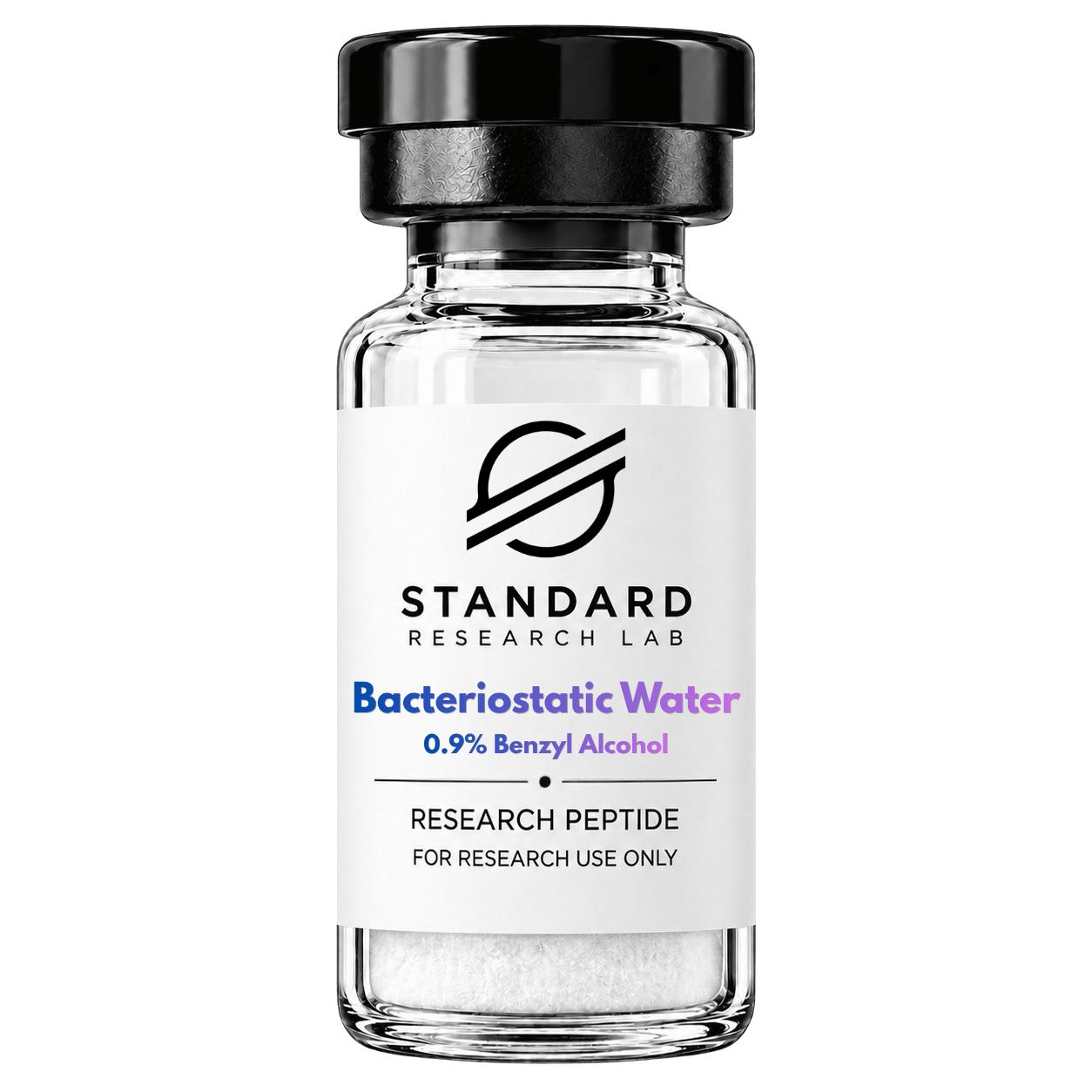
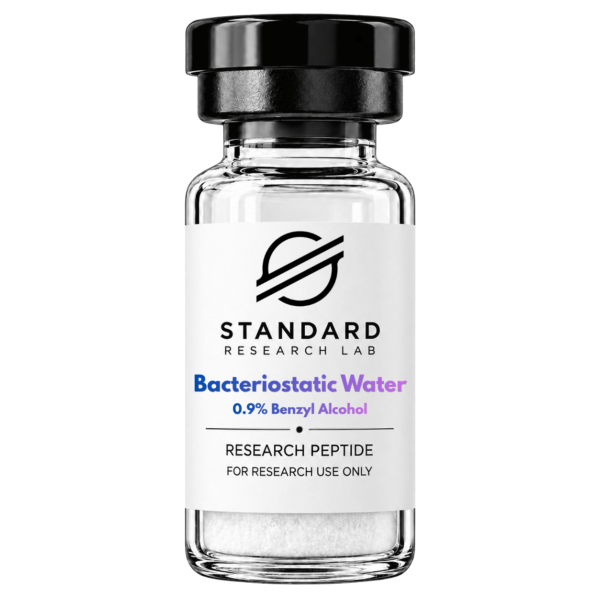
- Volume (Diluent): Quantified in milliliters (mL) or syringe units. This is the liquid space the compound occupies after dissolution in pharmaceutical-grade Bacteriostatic Water (sterile water preserved with 0.9% benzyl alcohol) or 0.9% Sterile Bacteriostatic Saline.
Why There Is No Single "Correct" Volume of BAC Water
Because bacteriostatic water does not alter the absolute quantity of the active compound, there is no single mandated volume for any given peptide. Instead, researchers select a volume based on three practical considerations:
1. Volumetric Precision on the Syringe
If a vial is reconstituted too densely, a standard target measurement might correspond to an infinitesimal tick mark (such as 1 or 2 units on an insulin syringe). Tiny manual draws introduce significant variance and measurement error. Adding more diluent spreads the peptide across a larger liquid volume, making it easy to hit an exact, reproducible measurement on calibrated tick marks.
2. Target Draw Volume Range
Conversely, over-diluting a high-mass vial (such as 10 mg or 15 mg) forces the researcher to draw excessive fluid volumes (e.g., 60 to 100 units). For smooth administration across in-vivo models, standard protocols favor draw volumes between 10 units (0.1 mL) and 30 units (0.3 mL).
3. Lyophilized Cake Solubility
Certain hydrophobic or structurally complex peptides require a baseline volume of liquid to fully dissolve into a clear, uniform solution. Adding sufficient diluent ensures rapid solubilization without forcing the cake to sit undissolved or requiring aggressive physical agitation.
Step-by-Step Reconstitution Math (U-100 Syringes)
Most laboratory protocols utilize standard U-100 insulin syringes (where 1 mL = 100 syringe units, meaning 1 unit = 0.01 mL). The step-by-step calculation works as follows:
Example A: 5 mg Vial Reconstituted with 2.0 mL BAC Water
- Step 1 (Convert Mass to Micrograms): 5 mg × 1,000 = 5,000 μg
- Step 2 (Convert Milliliters to Syringe Units): 2.0 mL × 100 = 200 units
- Step 3 (Calculate Potency Per Unit): 5,000 μg ÷ 200 units = 25 μg per syringe unit
- Step 4 (Determine Syringe Draw): For a target of 250 μg: 250 μg ÷ 25 μg/unit = 10 units. For a target of 500 μg: 500 μg ÷ 25 μg/unit = 20 units.
Example B: 10 mg Vial Reconstituted with 2.0 mL BAC Water
- Step 1 (Convert Mass to Micrograms): 10 mg × 1,000 = 10,000 μg
- Step 2 (Convert Milliliters to Syringe Units): 2.0 mL × 100 = 200 units
- Step 3 (Calculate Potency Per Unit): 10,000 μg ÷ 200 units = 50 μg per syringe unit
- Step 4 (Determine Syringe Draw): For a target of 1,000 μg (1 mg): 1,000 μg ÷ 50 μg/unit = 20 units. For a target of 2,500 μg (2.5 mg): 2,500 μg ÷ 50 μg/unit = 50 units.
To run these numbers automatically for any custom vial or measurement combination, use our online Peptide Calculator and organize test periods inside the Protocol Tracker Tool.
Reconstitution Quick-Reference Matrix
The following matrix illustrates concentration outputs and syringe draws across standard research vial masses and added bacteriostatic water volumes:
| Vial Mass | BAC Water Added | Resulting Concentration | Potency Per Unit | Draw for 250 μg | Draw for 500 μg | Draw for 1.0 mg |
|---|---|---|---|---|---|---|
| 2 mg Vial | 1.0 mL (100 units) | 2,000 μg/mL | 20 μg / unit | 12.5 units | 25 units | 50 units |
| 5 mg Vial | 1.0 mL (100 units) | 5,000 μg/mL | 50 μg / unit | 5 units | 10 units | 20 units |
| 5 mg Vial | 2.0 mL (200 units) | 2,500 μg/mL | 25 μg / unit | 10 units | 20 units | 40 units |
| 10 mg Vial | 2.0 mL (200 units) | 5,000 μg/mL | 50 μg / unit | 5 units | 10 units | 20 units |
| 10 mg Vial | 3.0 mL (300 units) | 3,333 μg/mL | 33.3 μg / unit | 7.5 units | 15 units | 30 units |
Reconstitution Across Popular Research Compounds
Optimal diluent selection depends on the dosing scale of the compound under study:
- Targeted Tissue Repair Chains: For compounds like BPC-157 and TB-500 (typically supplied in 5 mg or 10 mg vials with target evaluation doses in the 250 to 500 μg range), adding 2.0 mL of BAC water produces a clean, user-friendly 10-to-20 unit draw.
- Pulsatile Secretagogues: When working with somatotrophic peptides like Ipamorelin, CJC-1295, or Tesamorelin, microgram-level accuracy is critical to study clean pituitary pulsatility without non-specific receptor overflow. Utilizing our Peptide Calculator ensures accurate unit conversion prior to drawing.
- Metabolic & Mitochondrial Regulators: For high-mass research protocols evaluating compounds such as MOTS-c, 5-Amino-1MQ, or next-generation incretins in our Best GLP-1 for Weight Loss Guide, diluent volumes must be calibrated to avoid excessively concentrated solutions that resist complete solubilization.
- Administration Timing & Routes: For guidance on selecting routes and managing cycle schedules, review our breakdowns of Sub-Q vs. IM vs. Nasal Peptides and our Peptide Cycle Timing Guide.
Laboratory Handling, Reconstitution & Storage Standards
Peptides feature delicate tertiary peptide backbones that are easily damaged during reconstitution. Preserving biological stability requires strict handling procedures (detailed step-by-step in our Beginner's Guide to Peptides):
- Diluent Selection: Reconstitute lyophilized peptide vials using sterile, pharmaceutical-grade Pfizer Hospira Bacteriostatic Water containing 0.9% benzyl alcohol to prevent microbial growth across repeated sampling. Alternatively, use 0.9% Sterile Bacteriostatic Saline for cell-culture assays requiring strict isotonicity.
- Reconstitution Protocol: Use a sterile EasyTouch 31G Syringe to let the diluent trickle slowly down the inside glass wall of the vial. Never spray liquid directly onto the lyophilized powder cake under direct vacuum. Avoid vigorous agitation, shaking, or vortexing; roll the vial slowly between your palms until the solution turns completely clear.
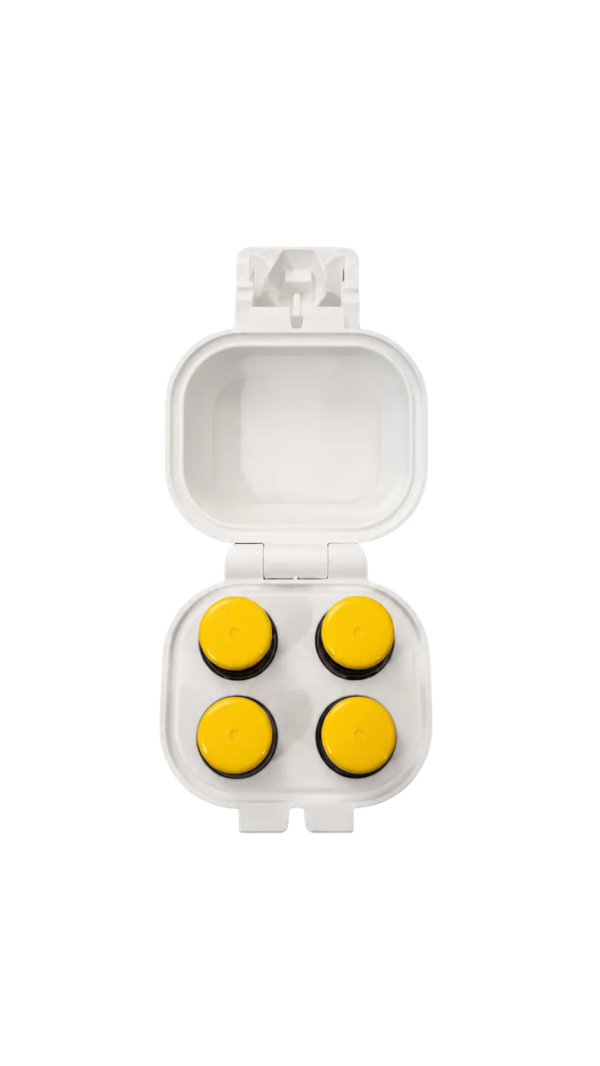
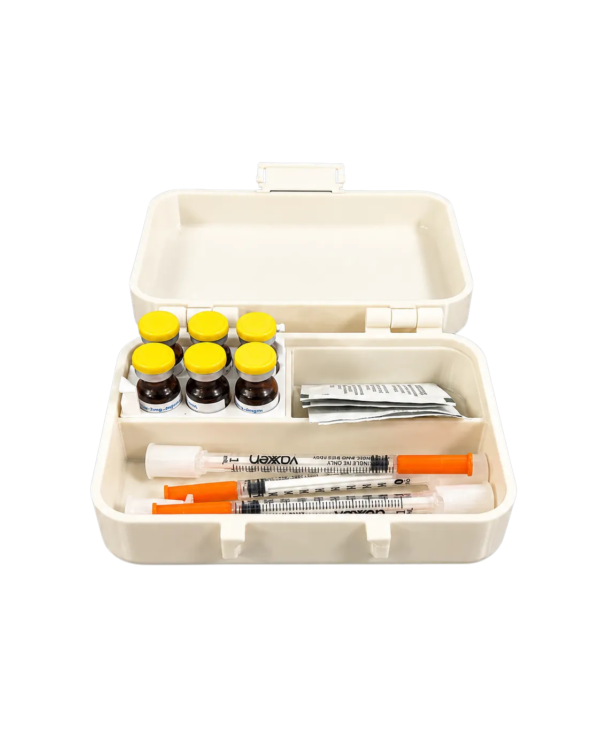
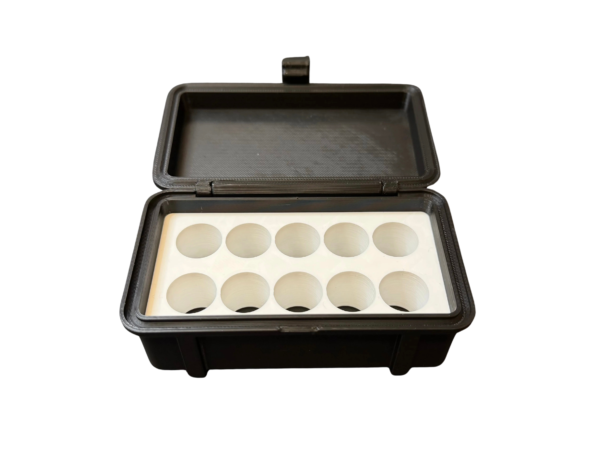
- Cold-Chain Storage: Store dry lyophilized powder at -20°C for long-term molecular stability. Maintain reconstituted liquid solutions between 2°C and 8°C (36°F to 46°F) inside a secure, light-shielded Peptide Vial Case or insulated Compact Travel Case to protect against mechanical vibration and light degradation.
The volume of bacteriostatic water added to a research vial does not alter the absolute quantity of peptide available; it solely establishes the solution's concentration. By choosing a diluent volume that lands your target draw cleanly between 10 and 30 units on a standard syringe, you minimize measurement errors, preserve peptide integrity, and maintain strict protocol consistency. When preparing a new research series, reference the formula above or verify your calculations with our Peptide Calculator to ensure reproducible laboratory results.
← View all peptide guides, research & protocols in our Blog Archive
Premium Collection
Explore selected research products.


One comment